How does a used clothing sorting facility work? From delivery to sale
- Where does used clothing come from and why is its quality so unpredictable?
- What does unloading and initial quality control look like in a used clothing sorting facility?
- Pre-sorting of used clothing in a sorting facility
- Sorting used clothing
- What criteria are used to assess clothing quality in a sorting facility?
- Why is used clothing divided by target markets?
- Packing, final quality control, and shipping of used clothing
- A used clothing sorting facility as a quality factory
A used clothing sorting facility is a place where an unpredictable raw material is turned into an organized product. The entire process – from delivery to sale – is quite complex and far more decisive than it may seem at first glance. It is in the sorting facility that the future of garments is determined. Skilled sorters decide which items go into the cream grade, which end up in the cheapest bundles, and which are sent for recycling.
In this article, we walk through the entire process – from the moment used clothing arrives at the sorting facility to its final sale – exactly as it happens in reality. Let’s take a closer look.

Where does used clothing come from and why is its quality so unpredictable?
Used clothing quality vs. country of origin
At first glance, it might seem that the country of origin should determine the quality of clothing. And to some extent, it does – garments from the USA or Western Europe often offer a better chance of finding strong brands or higher-quality materials. The problem is that this is still only a probability, not a guarantee. Clothing delivered to sorting facilities mainly comes from charity collections, door-to-door systems, and textile collection bins. In the United States especially, this operates on a massive scale. Clothes are donated in bulk, often without any prior selection. A similar model exists in the UK, Germany, and Scandinavian countries. This is where the first complication appears – the country of origin alone is not enough. The exact location matters. Collections from affluent areas of London look very different from those gathered in small towns in Germany. The differences are visible not only in brands, but also in sizing, level of wear, styles, and materials. Scandinavian collections often include high-quality wool and outdoor clothing, the USA brings a lot of cotton, plus-size items, and sportswear, while Southern Europe tends to provide lighter, more seasonal, and more colorful garments.
The unpredictability of collection bins
When it comes to the origin of used clothing, there is another, less discussed factor related to collection bins. In many cases, clothing containers are not treated as a place for selective donation, but rather as a quick way to get rid of unwanted items. People use them during moves, when clearing out apartments after relatives, or during general clean-ups. As a result, a branded jacket may end up next to a worn-out blanket or a single shoe. This is especially visible in so-called “original” (unsorted) clothing—meaning goods that have not undergone any prior selection. This is the rawest form of inventory. The quality can change literally from one piece to another, and the contents are often completely unpredictable.
Used clothing and the impact of fast fashion
Fast fashion has a huge impact on quality today. The flood of cheap clothing means that even collections from wealthy countries increasingly include items with very low durability. Polyester, thin fabrics, and poor construction quality cause garments to lose value quickly – sometimes after just a few washes.
Long storage and its impact on quality
Finally, there is one more factor that is rarely visible from the outside – time. Clothing does not always reach sorting facilities immediately. It often sits in warehouses or intermediate logistics points for weeks or even months. As a result, winter clothing may arrive at a sorting facility in the middle of summer. For businesses, this means storage challenges and frozen capital. For quality, it introduces additional risks related to long-term storage conditions.
A used clothing sorting facility does not start its work with a finished product – but with chaos. Its role is to organize that chaos and turn it into something with real market value.
What does unloading and initial quality control look like in a used clothing sorting facility?
The moment a shipment is received at a sorting facility is one of those stages that may seem simple from the outside, but in reality has a huge impact on the profitability of the entire batch. This is where it quickly becomes clear whether the delivered goods are suitable for further processing. The first step is, of course, unloading. Depending on the shipment, we are dealing either with bags or with heavy, compressed bales that can weigh anywhere from several dozen to over 400 kilograms. Even at this stage, the first warning signs can appear, for example, damaged packaging or traces of moisture. And these are not minor details. In the used clothing industry, moisture is one of the biggest risks. If a bale has been exposed to moisture during transport or earlier, it often means the beginning of a problem developing inside. Once opened, it may turn out that the clothing has a musty smell or even early signs of mold. In such cases, the value of the batch drops immediately, and part of the goods must simply be removed from further circulation.
That is why, right after unloading, a quick quality check begins. The following aspects are assessed:
- whether the goods are dry,
- what kind of smell they have—fresh, neutral, or difficult to remove,
- whether the packaging has been compromised,
- whether there are visible signs of transport damage.
If a batch raises concerns, it may be:
- partially rejected,
- redirected to a lower quality category,
- or, in extreme cases, excluded from sorting altogether.
Pre-sorting of used clothing in a sorting facility
At this stage, the clothing is placed on a sorting line, where the evaluation is still relatively general, but sufficient to decide whether a given item should proceed further in the process. This is not yet about distinguishing between Cream and Grade B. Instead, the focus is on quickly identifying items that are wet or show signs of moisture, have visible mold or have no commercial value (e.g., single items, textile waste). Depending on the shipment, even 5–15% of goods can be removed from the process at this stage. In lower-quality batches, this share can be even higher. What happens to these items? Most often, they are directed to:
- material recycling,
- conversion into industrial cleaning cloths,
- or, in the worst-case scenario, disposal.
Pre-sorting is a financial decision, not just a quality one. Every item that moves forward generates costs – sorting, storage, and packaging. If it is already clear at this stage that a garment has no resale potential, further processing simply does not make economic sense. That is why the experience of workers is crucial here. A selection process that is too lenient leads to the sorting line being clogged with low-quality goods. On the other hand, overly aggressive filtering can result in the loss of potentially valuable items. It’s a fine balance – one that directly impacts the financial performance of the entire sorting operation.
Sorting used clothing
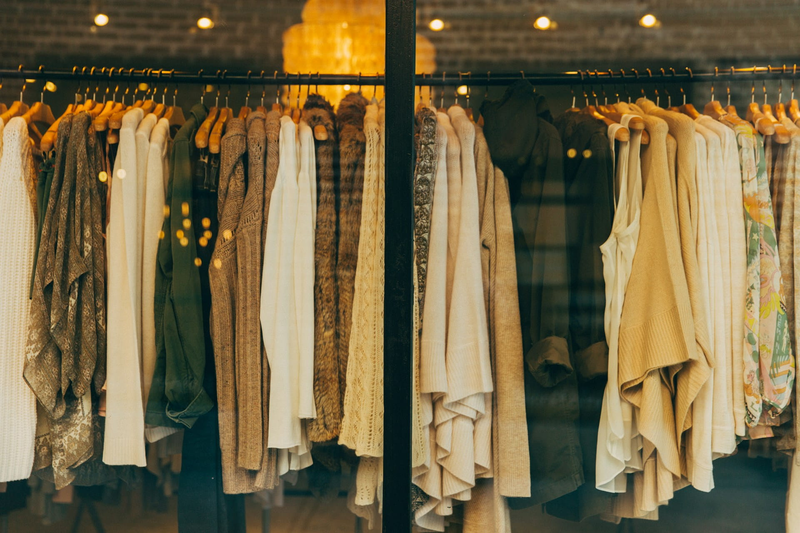
If the previous stages were filters, this is where the actual product is created. The sorter picks up a garment and, within a very short time – often just 2–3 seconds – must evaluate it and assign it to a specific category. There is no room for hesitation. What matters here is experience, visual memory, and a well-developed “feel” for fabrics.
The first level of classification is by product type. Clothing is divided into specific categories: t-shirts, shirts, trousers, jackets, children’s wear, sportswear. Each of these groups has a different market value and different buyers.
The second level is quality grading. The most commonly used system looks like this:
- Cream – items in very good condition, often looking like new, with no visible signs of wear.
- Grade A – clothing in good condition, with minimal signs of use.
- Grade B – visible wear, but still suitable for resale.
- Grade C – low quality, often directed to lower-price markets or further processing.
This system is not fully standardized globally. Each sorting facility has its own nuances and tolerance thresholds.
Vintage clothing is selected separately, premium items are handled differently, and everyday clothing is assessed in yet another way. The same t-shirt can end up in different categories depending on who evaluates it, current market demand, and the sorting facility’s sales strategy. That’s why the experience of sorters is so important. A stricter team will produce a higher-quality final product but generate more waste. A less strict approach may allow more items through but lower the average quality.
What criteria are used to assess clothing quality in a sorting facility?
Sorting used clothing is not random or based on subjective intuition. Every experienced sorter works according to specific criteria that determine whether a garment is suitable for resale and which quality category it belongs to. The primary factor is, of course, physical condition. Sorters check:
- holes and abrasions – not only in visible areas but also in stress points such as knees, elbows, and pockets;
- pilling and loss of fabric structure – especially important in knitwear, cotton, and wool;
- stains and dirt – if visible, they automatically lower the quality grade.
Experienced workers know that certain parts of a garment reveal its true age and level of use. That’s why particular attention is paid to:
- underarms – signs of staining,
- collars – dirt and deformation,
- cuffs – wear and dirt that are difficult to remove.
Mechanical functionality is also assessed within seconds:
- zippers – for example, a broken zipper in a down jacket can downgrade an item from Cream to Grade C;
- buttons – completeness is especially important in luxury coats or branded shirts;
- prints and applications – rubber prints must not crack, which is a common issue in sportswear and streetwear.
A modern sorting facility also evaluates brand resale potential. A slightly worn premium t-shirt (e.g., Ralph Lauren or Tommy Hilfiger) may be classified higher than a brand-new, no-name polyester shirt.
Proper lighting at the workstation is also crucial. Some stains are invisible in regular light but become visible under lighting similar to daylight. An experienced sorter also evaluates fabric fatigue – whether the material still feels dense and resilient, or has become thin and worn out due to excessive washing.
Fabric quality itself is also important:
- weight (GSM) – heavier, denser fabrics hold their shape better and are more durable;
- composition – natural fibers, wool, and higher-quality cotton are more valuable than thin polyester, which quickly loses shape.
Assessing the quality of used clothing in a sorting facility is a combination of technique, experience, and trained instinct. Every decision made within those few seconds can increase or decrease the value of the entire batch.
Why is used clothing divided by target markets?
Each batch of clothing is carefully matched to specific target markets in order to maximize its value and minimize the risk of unsold inventory. Not every t-shirt, jacket, or dress is suitable for every market. Local preferences, quality standards, and expected price levels mean that sorting facilities must operate strategically. A typical American mix arriving at a sorting facility is diverse enough to be divided among several global customer segments, for example:
- Africa – the largest demand is for Grade A clothing, carefully sorted into specific categories according to the requirements of each country. Customers are mainly looking for affordable summer clothing. Volume and functionality are key here.
- Pakistan and South Asia – this market is highly price-driven. It receives both mid-quality mixes and items that would be classified as Grade C in the USA.
- Latin America – similar to Africa, this market expects good quality at a competitive price. Lightweight, summer clothing is in highest demand. Due to strong recognition of American brands, the presence of well-known labels also plays an important role.
- Europe – primarily receives premium items and well-preserved branded clothing (Cream, Grade A), which can be sold in second-hand shops and vintage boutiques. Customers pay close attention to fabric, condition, and labels.
Packing, final quality control, and shipping of used clothing
After going through the entire selection and segmentation process, the clothing is finally ready for physical packing. Proper packaging protects garments from damage during transport and ensures that the product retains its value until it reaches the customer. Packaging standards and product weights vary depending on the target market.
Packing and labeling
Sorted clothing is packed according to garment type and customer requirements. Standard packaging formats include:
- small bales weighing 45/55 kg or containing 200–400 pieces – typically used for Grade A/B clothing destined for Africa or Latin America,
- bags weighing 20–25 kg – most commonly used for Premium/Cream clothing,
- large bales weighing 400–500 kg – the optimal format for mixed used clothing shipped to Pakistan.
At the packing stage, every product is clearly labeled with the type of assortment and weight. This ensures that the buyer receives exactly what was ordered, and allows the sorting facility to easily locate goods in the warehouse.
Shipping and distribution
The final step is transporting the used clothing to customers:
- Africa and Latin America – sea freight in 20’ and 40’ containers, mainly small bales (45–55 kg),
- Pakistan and South Asia – high volumes of large bales (400–500 kg) loaded into fully packed 40’ containers,
- Europe – 20–25 kg bags with Premium clothing transported by road (trucks, vans, or pallet shipments).
Thanks to this process, a sorting facility transforms a chaotic mix of clothing from the USA into structured products with global market value – maximizing revenue from every batch.
A used clothing sorting facility as a quality factory
The entire process shows that how a used clothing sorting facility operates is not limited to storage and simple division of clothing into batches. It is a place where a random mix of second-hand clothing is transformed into a refined product, ultimately delivered to a specific customer in a selected international market.
Every stage of the process matters, from the primary sources of used clothing, such as charitable collections from the USA, to selection processes, pre-sorting, brand sorting, and market segmentation. Clothing sorted by quality – from Cream down to second-grade – then moves to wholesalers, and from there to second-hand shops and marketplaces in developing countries. This is where it is decided what becomes a premium product, what goes to recycling, and what is sold at a lower price point.
In our sorting facility, it’s not just about the physical condition of the garments. While quality control, label verification, market value assessment, and the evaluation of women’s, children’s, and men’s clothing are all crucial, an ecological approach is equally important. Thanks to this, used clothing, overstock, outlet goods, and second-hand items are transformed into an ассортимент aligned with the principles of sustainable fashion. Every package – whether bales of trousers, sweatshirts, dresses, t-shirts, or footwear – leaves the sorting facility ready for further distribution, reaching shops and wholesalers worldwide at competitive prices.
Our USA used clothing sorting facility operates like a true quality factory: taking garments from various sources and in varying conditions, and turning them into high-quality, properly sorted products ready to meet the demands of both the market and the customer.
Want to see this process from the inside?
You're welcome to visit our sorting facility or join a video call — we'll walk you through the line, quality grades, and a batch that could ship directly to you.
FAQ – Frequently Asked Questions
A brand can significantly raise a garment’s resale value, but it does not replace an assessment of its condition. On the other hand, branded clothing, even when worn, usually sells faster and is more sought after than well-preserved items without a recognized brand name. That’s why we treat brand as one important sorting criterion, not the sole determinant of value.
Country of origin is just one factor shaping a shipment’s character. Collection method, location, household profile, season, and the type of clothing most commonly donated in a given region all matter too. That’s why even two batches from the same country can have completely different composition and sales potential. This is why choosing sorted clothing is the safest option.
Markets differ in climate, preferred styles, sizes, prices and expected quality level. Professional sorting routes clothing to where it can find the most buyers and the right use. For example, top-quality items with a relatively high margin sell very well in Europe, while in Africa they would often be seen as too expensive for typical buyers. Conversely, cheaper, lower-quality clothing with visible wear, popular in Africa, would not find many buyers in Europe.
The packaging method has to match both the type of goods and the logistics of further distribution. Smaller bags and bales hold carefully sorted, higher-quality clothing, which goes mainly to European markets for retail sale. Large bales make efficient use of space when transporting large volumes to more distant markets. This approach also suits sorting facilities with their own resources for unpacking and re-sorting clothing, as well as lower-quality clothing destined for industrial use.
Storage itself does not have to mean lower quality, but poor conditions can harm the goods. What matters most is humidity, temperature, how items are protected, and storage time. In addition, storing seasonal clothing for too long can mean it reaches the market when demand for it is low. That’s why we work to keep the entire process, from sourcing the goods to delivering them to end customers, as short as possible.