Why is second-hand clothing from the USA of better quality?
- Is second-hand clothing from the USA really better quality? Facts instead of myths
- Overconsumption and fast clothing turnover vs. better Quality of second-hand clothing from the USA
- A developed second-hand market and the quality of clothing from the United States
- Vintage and specific segments vs. higher quality of clothing from the USA
- Sorting and selection – why they may matter more for quality than country of origin?
Second-hand clothing from the USA has been highly popular for years. Many people say it is “better quality,” but not everyone actually understands why. Is it about materials, brands, or maybe the way clothes enter the second-hand market? In this article, we break down the topic of higher-quality second-hand clothing from the USA into its key factors – no myths, just concrete arguments.

Is second-hand clothing from the USA really better quality? Facts instead of myths
This is one of those questions that usually gets a quick answer: “yes, it is better.” But in reality, the situation is more complex. Second-hand clothing from the USA often does come out ahead in terms of quality – but not because all garments are better made there.
The key lies elsewhere: in the scale of the market and the way clothing enters the second-hand circulation. The United States is a massive market where people buy a lot and very frequently. On top of that, there is wide access to brands, both mainstream and premium, which increases the chances that truly high-quality pieces end up in sorted batches. That said, not everything from the USA is automatically better. A lot depends on where exactly the clothing comes from and how it has been sorted. Two batches from the USA can be completely different – one filled with branded, well-maintained items, and another rather average.
When thinking about the quality of second-hand clothing from the USA, it’s also worth paying attention to a factor that is sometimes overlooked – the physical durability of many garments. In the US, tumble dryers are standard, and they put clothes through significant stress. If something is going to survive multiple drying cycles, it has to be made more solidly – with stronger seams and heavier fabrics. That’s why many garments from this market – even basic ones like t-shirts – are simply thicker and more durable. You’ll often come across so-called “heavy cotton,” meaning cotton with a denser weave, which holds its shape better even after extended use.
The exact source of the clothing also matters. In the industry, there is a term called “Credential Clothing,” which refers to unsorted goods collected directly from specific locations, often from more affluent neighborhoods. Factors such as ZIP codes or the demographic profile of a given area can determine whether a batch contains premium clothing or just an average mix.
So when someone says “second-hand clothing from the USA is better quality,” it’s worth уточ specifying – it's better when it is well selected, comes from the right source, and is based on products that were already more durable at the production stage.
Overconsumption and fast clothing turnover vs. better Quality of second-hand clothing from the USA
One of the key reasons why second-hand clothing from the USA is often in better condition is overconsumption. In the United States, people simply buy a lot of clothes—and at a pace that is hard to compare with Europe. It is estimated that the average American purchases as many as 60–70 clothing items per year. There is also another important factor – the culture of donating clothes. In the US, regularly clearing out wardrobes and passing clothes into the second-hand circulation is completely normal. What’s more, it is often linked to tax deductions, so for many people it is simply more выгодно to donate clothes than to sell them independently. As a result, items that would easily be considered “almost new” in Europe enter the second-hand market. This means that sorting facilities often receive clothing that is:
- brand new with tags (so-called deadstock),
- worn only once – for example for an event or photos,
- washed once, with no visible signs of wear such as pilling or stretching.
On top of that, frequent sales, outlet stores, and easy access to new collections further accelerate wardrobe turnover. The result? Clothes enter the second-hand circulation not because they are worn out, but simply because someone made room for new items. Of course, this still doesn’t mean that every piece of second-hand clothing from the USA will be in perfect condition. However, this fast turnover combined with the large-scale donation culture significantly increases the chances of finding items that show very little wear.
A developed second-hand market and the quality of clothing from the United States
Another factor that influences the quality of second-hand clothing from the USA is the highly developed resale market. It’s not just about traditional thrift stores, but an entire ecosystem – from charitable organizations, through resale shops, to online platforms. In the United States, buying second-hand clothing has long stopped being a niche and has become a normal choice, even among people who could easily afford new items. As a result, a significantly higher volume of good-quality clothing enters circulation, including premium brands. The market is large and mature enough to cover multiple segments – from low-cost everyday wear to designer pieces and outdoor clothing. Importantly, many of these garments go through several stages of selection before being exported, which simply increases the chances of identifying higher-quality items.
It’s also worth mentioning luxury consignment stores, which are very popular in the US. If an item, often branded, doesn’t sell within a certain period, it may be passed on further, for example as a donation. In this way, garments that were recently available in premium boutiques enter the general second-hand circulation.
The more developed and multi-layered the secondary market is, the higher the entry threshold for clothing circulating within it. It is this system – not just the fact that the clothing comes from the USA – that largely explains why second-hand clothing from this market is often perceived as higher quality.
Vintage and specific segments vs. higher quality of clothing from the USA
If there is one area where second-hand clothing from the USA truly stands out, it is the vintage segment and selected product categories. This is not about “clothing from the USA” in general, but about very specific types of garments that have long been known for being more durable and better made.
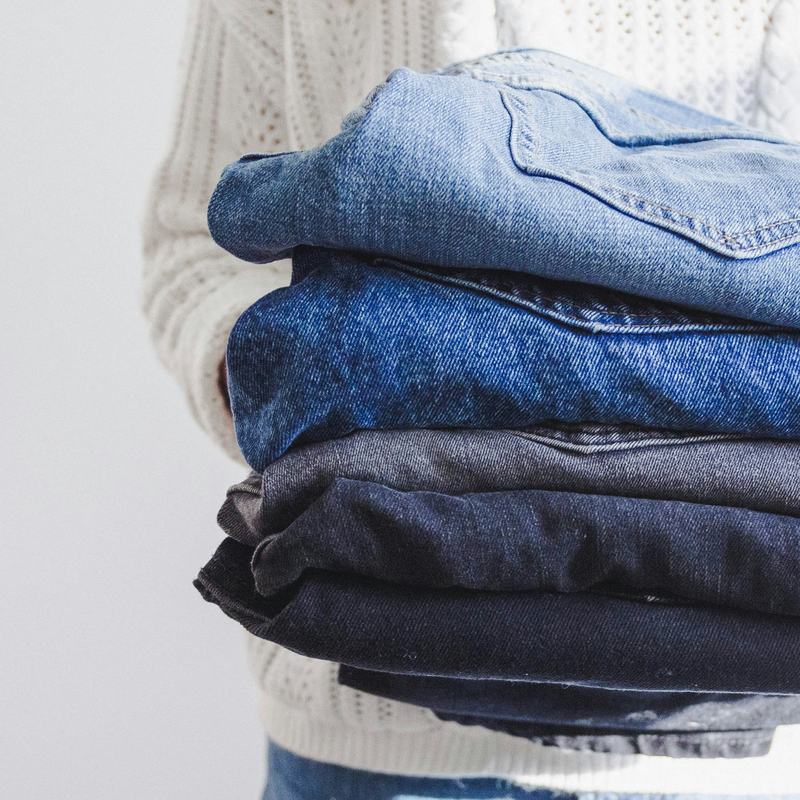
This is most evident in segments such as denim, workwear, and outdoor clothing. Older jeans, work jackets, or sweatshirts were often produced using heavier materials and with a stronger focus on durability. At the time, clothing was simply meant to withstand more—it wasn’t designed for just one season, but for years of use. That’s why many of these pieces still hold their shape today and often look better than many new fast fashion items.
It’s worth paying attention to specific details. American vintage is very often based on so-called heavyweight cotton – cotton with a higher fabric weight and a denser weave. Classic sweatshirts, such as Champion Reverse Weave, were constructed in a way that reduces shrinkage and distortion. This means that even after ten, twenty, or more years, they retain their characteristic “boxy” fit. This is even more noticeable in denim. Vintage American jeans, such as Levi’s 501, often had a fabric weight of 14 oz or more and were made from 100% cotton, without elastane. In comparison, modern high-street brands rarely exceed 10–12 oz. This difference means that older denim not only wears out more slowly, but also develops a distinctive patina over time, rather than simply thinning or tearing. The same applies to workwear. Brands like Carhartt and Dickies used triple stitching and metal rivets in areas most exposed to stress. These were standards driven by real needs—clothing had to withstand heavy work, not just look good for a single season. A similar pattern can be seen in sportswear and so-called college wear. Older collections from well-known brands were often more refined in terms of details—from the quality of prints to the weight of the fabric. That’s why vintage clothing from the USA is not only more visually distinctive, but also simply more durable.
The “Made in USA” label is also significant. For many people today, it is a marker of quality, indicating that the item was produced before the era of mass outsourcing to cheaper factories, where quantity often takes precedence over attention to detail.
It’s important to note, however, that this “higher quality” of second-hand clothing from the USA does not apply to the entire market. It most often refers to specific categories and older production years, rather than to mass-produced clothing entering circulation today.
Sorting and selection – why they may matter more for quality than country of origin?
The country of origin does matter, but it is not what ultimately determines the quality of the final product. What matters much more is what happens to the clothing after it is collected—namely sorting and selection. Imagine two batches of second-hand clothing from the USA. In theory, they come from the same market, but in reality, they can be completely different. One may contain branded, well-maintained garments, often in very good condition, while the other may consist of average, worn, or hard-to-sell items.
In the industry, there is a system known as grading, which means dividing clothing into quality categories – from cream (the highest quality, often like new), through mid-range grades, to lower-quality items. The more precise the selection, the higher the chance that the final product will be attractive to the customer. And this is the key point – it’s not “USA” that guarantees quality, but whether a given batch has been properly filtered.
Interestingly, selection begins much earlier than many people think – already at the collection stage. In the US, location plays a huge role, especially ZIP codes. Clothing collected from affluent suburbs, such as New Jersey, Connecticut, or wealthier parts of California, statistically has a higher value than that from less affluent areas. Professional sorting facilities are well aware of this and are willing to pay more for so-called “Credential” from specific locations, because the chances of finding branded, lightly worn clothing are simply higher.
It’s also important to distinguish between two terms that are often confused: “Credential” and “sort.” USA Credential refers to unsorted goods – something like buying a mystery mix. You might find valuable pieces, but also items with little to no resale value. A “sort,” on the other hand, is already a filtered product, which costs more because the selection work has already been done. This is exactly why prices among second-hand clothing suppliers can vary so significantly – you’re not just paying for the clothing, but for the quality of selection.
Today, this process is even more advanced. Large sorting facilities increasingly rely not only on manual labor but also on vision systems capable of recognizing logos and identifying branded garments within seconds. As a result, the best items are less and less likely to end up in low-grade mixes—they are automatically directed into higher quality categories.
Hygiene is another important aspect. Clothing from the USA is often transported in containers for many weeks, so selection also includes checking cleanliness. Professional sorting facilities reject items with stains, moisture, or unpleasant odors that could affect the entire batch.
If quality is your priority, don’t look only at the country of origin – focus above all on the used clothing supplier, the source of collection, and the selection process. The market offers significant opportunities when it comes to second-hand clothing quality. The combination of scale, access to brands, fast turnover, and advanced selection systems means that, compared to Europe, clothing from the United States often performs better, especially in terms of durability and materials. This translates into a higher chance of finding items that not only look good but also last longer –whether it’s heavyweight cotton t-shirts, solid shirts, durable jeans, or branded products that were originally more expensive in the US retail market.
Let’s be honest – with the right used clothing supplier and informed purchasing decisions, second-hand clothing from the USA can be a very strong asset in your offering. Especially today, when customers are increasingly paying attention not only to price, but also to quality and the origin of clothing.
US clothing is only better when it comes from the right source.
At A&E Clothing we collect material directly in the USA and sort it in our own facility — no middlemen. Call or write and we'll show you the goods before you place an order.
FAQ – Frequently Asked Questions
As a supplier, we can guarantee a defined sorting standard, but we cannot guarantee an identical level for every single item. Used clothing is a secondary product, so variation in condition, material and degree of wear is natural. This is exactly why, beyond the origin of the goods, the quality of selection and sorting matters so much.
Used clothing from the United States stands out for its high quality, variety, the presence of many globally recognized brands, and a large share of unworn items, often still with tags. That said, it doesn’t mean every batch from the USA will outperform used-clothing batches from countries such as the UK, France, Canada or China. Ultimately, what matters most is choosing sorted clothing assigned to a category that meets consumer expectations in a given market.
Yes, although brand is not the only criterion. A well-known brand can increase a product’s appeal to the end customer, but when assessing clothing, condition, material quality and resale potential matter just as much.
We sort used clothing sourced from the United States into more than 80 categories, many of which carry genuinely high sales potential. Among them: vintage clothing for its uniqueness, sportswear thanks to well-recognized brands such as Nike, Reebok and Adidas, jackets for their high per-unit value, streetwear for its popularity especially among younger buyers, denim for its quality, and college and varsity-style clothing for its timeless appeal.
Differences between batches usually come down to the collection source and the standard applied when preparing the batch. These differences tend to show up most in unsorted clothing. Clothing we divide into quality categories such as cream, grade A or grade B, however, has a consistent standard, thanks to the very specific sorting rules we apply.