How does used clothing collection work in the USA? A guide to american raw materials for wholesalers
- How massive is the volume of textile waste in the USA, and why is it a stable source for business?
- What are the financial pressures driving used clothing collections in the USA?
- What are the three main categories of US used clothing entering the B2B wholesale market?
- Why is logistics on the US East Coast an excellent source of used clothing?
- How do the US domestic supply chain and international shipping function together?
- What is the new and critical obligation for polish used clothing wholesalers regarding the SENT system?
- Why is Pakistan the global center for textile processing and recycling?
Have you ever wondered why used clothing from America enjoys such high popularity in Europe? For owners of wholesale companies and large enterprises in the second-hand industry, a stable, repeatable, and brand-rich source of supply is essential. The US market is a true goldmine of opportunities in this regard, though it is also a complex logistical machine.
Before a bag from New York or Boston reaches sorting facilities and wholesalers, and from there onto store racks, it passes through an advanced process of collection, selection, and transoceanic transport. Understanding this supply chain allows you to make better purchasing decisions and maximize profit margins in the wholesale clothing trade. How exactly does this process look at the source? Read our article to find out.
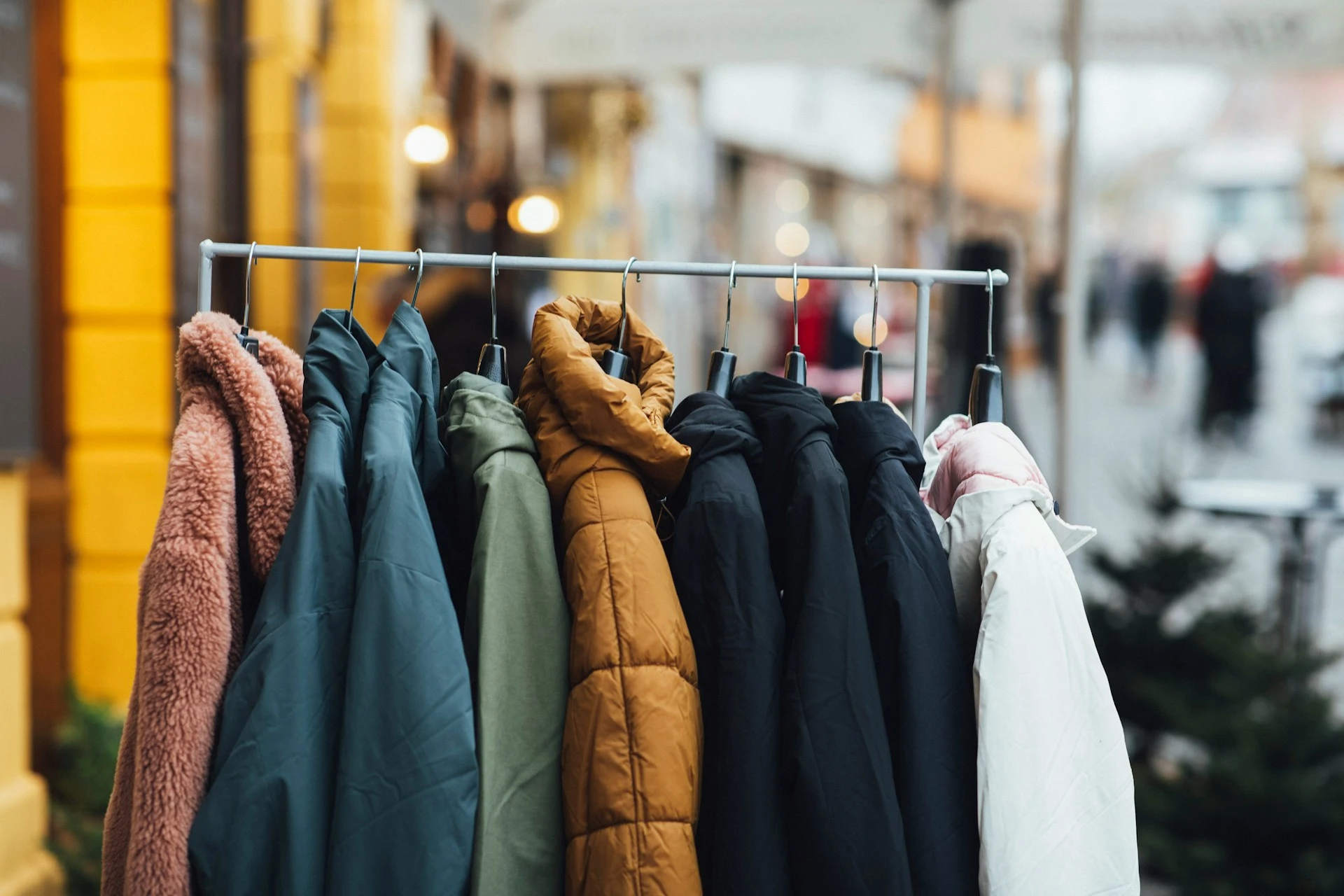
How massive is the volume of textile waste in the USA, and why is it a stable source for business?
The American consumer market generates a massive stream of secondary raw materials driven heavily by the fast fashion phenomenon. To understand the potential of this market, it is worth looking at the hard numerical data published by the US Environmental Protection Agency (EPA). The average citizen of the United States throws away approximately 81.5 pounds (nearly 37 kg) of clothing and other textile products annually. In the scale of the entire country, this generates approximately 17 million tons of textile waste per year. This volume is managed in the following way:
- 14.7% (about 2.5 million tons) – goes to recycling and secondary circulation processes (this is where the raw material for wholesalers comes from).
- Over 11 million tons (66.5%) – is deposited directly into landfills.
- Over 3 million tons (18.8%) – undergoes thermal transformation with energy recovery.
Where does such enormous consumption come from? For example, from the fact that modern clothing consists of about 54% polyester, the global production of which is constantly growing. Production is cheap, and wardrobe turnover among Americans is lightning-fast.
What are the financial pressures driving used clothing collections in the USA?
Landfill deposition of clothing represents a massive budgetary burden for American cities and taxpayers. The average cost of landfilling one ton of solid waste in the USA is approximately 62.28 USD. In densely populated and wealthy states of the New England region, these rates reach up to 89.61 USD per ton.
Recycling programs and used clothing collections allow American cities to save millions of dollars annually by avoiding landfill tipping fees. It is exactly this financial pressure that forces local governments to facilitate and promote textile collections on a large scale.
Balance of textile waste management in the USA
| Economic Indicator | Numerical Value | Data Source |
| Annual textile waste generation in the USA | 17.03 million tons (34.06 billion pounds) | EPA |
| Volume of textiles directed to recycling | 2.51 million tons (5.02 billion pounds) | EPA |
| Total textile recycling rate | 14,7% | EPA |
| Volume of textiles deposited in landfills | 11.30 million tons | EPA |
| Average waste landfilling cost (USA total) | 62.28 USD / ton | Ecosmith Recyclers |
| Average waste landfilling cost (New England) | 89.61 USD / ton | Ecosmith Recyclers |
| Annual savings from textile recycling | 156,322,800 USD | Calculations based on EPA and Ecosmith data |
| Annual landfilling costs for clothing | 1,060,628,400 USD | Ecosmith Recyclers |
What are the three main categories of US used clothing entering the B2B wholesale market?
The American used clothing collection system distinguishes raw materials into precise categories that matter for wholesalers purchasing goods for containers. If you buy goods for your wholesale business, you must know how the collection method affects the bag's contents. We distinguish three main categories:
1. Unsorted original (credential clothing / original)
Unsorted original clothing represents the most sought-after and valuable secondary raw material. Original clothing is merchandise that remains completely untouched and has not passed through the hands of sorters in the USA. It enters further processing in the exact same bags and packaging in which it was given by the original owner.
Collection companies gather this raw material directly through street clothing bins, door-to-door collections, and local drives in wealthy neighborhoods. Because these bags have not been opened, they contain the most valuable apparel items: branded clothing, jewelry, leather goods, original footwear, and toys. A necessary condition is that the goods must be clean and dry – any wet clothing or waste is rejected during collection to prevent mold in transit.
2. Institutional used clothing (mixed rags / institutional clothing)
Institutional used clothing consists of garments donated to American charity shops (such as Goodwill or Salvation Army) that did not find buyers during the display rotation period. This retail floor rotation typically lasts from 3 to 4 weeks, or the items were initially rejected for failing to meet the specific store's quality standards.
Logistics facilities press and tie mixed rags into heavy bales weighing from 900 to 1,200 pounds (approximately 400–540 kg). The market value of this merchandise is significantly lower because thrift store employees or local retail customers have already stripped away the high-value "gems".
3. Store returns and closeouts
Store returns are brand-new products completely free from signs of use or containing minimal manufacturing defects (e.g., a missing button or broken zipper). Large retail chains liquidate these inventories at reduced prices after the end of a season. This merchandise is most often valued per piece or per full pallet lot, rather than by raw weight.
Comparison of physical and commercial characteristics of US raw materials
| Comparative feature | Credential clothing (original) | Mixed rags (institutional) | Store returns (closeouts) |
| Packaging status | Completely sealed, original donor bags | Opened, sorted, re-packed, and compressed bales | New, often in original retail packaging |
| Pre-filtering level | Zero initial quality filtering or item skimming | Highest-value items removed by thrift shops | No signs of use (first-grade commercial stock) |
| Assortment mix | Mixed apparel, shoes, bags, belts, accessories | Unsold clothing, lower-value domestic textiles | Segregated by gender, specific brands, or types |
| Market value / price | High due to the potential of finding premium and vintage brands | Low, sold strictly by weight (rate per pound / kg) | Very high, calculated per piece or wholesale lot |
Why is logistics on the US East Coast an excellent source of used clothing?
The US East Coast serves as a strategic sourcing area for original credential clothing for European importers and wholesalers. This region includes massive metropolitan areas like Boston, New York, Baltimore, and Washington, characterized by high population density, high affluence levels, and a developed shopping culture. How do these demographic features translate into the physical structure of the collected raw material?
- A higher share of premium and mid-range brands – original collections from the East Coast contain a high percentage of globally recognized brands like Levi's, Ralph Lauren, Tommy Hilfiger, and Calvin Klein. In the USA, this clothing is significantly cheaper than on the European market, so consumers discard it without much regret.
- High material quality – American casual clothing features thick, durable cotton fibers and high-grade denim. This stems from the preferences of local consumers who value everyday apparel with enhanced resistance.
- A wide range of sizes – the American market stands out with an expanded sizing structure that includes a broad segment of plus-size clothing, allowing wholesalers to meet the diverse needs of target buyers in local markets.
- Identyfying highly demanded market segments – the structure of original credential clothing is dominated by sportswear, casual wear, and streetwear (hoodies, t-shirts), for which demand in Europe remains stable regardless of the season.
How do the US domestic supply chain and international shipping function together?
Used clothing domestic collection in the USA relies on an extensive network of bins and municipal partnerships. For example, the certified social enterprise Helpsy (which holds B-Corp status) conducts collections in cooperation with local governments. Municipalities that provide locations for containers or promote free home pickup save massive amounts on landfill tipping fees.
In a partnership program executed in Union County, New Jersey, local collection points gathered 86,085 pounds of textiles by November 2025. This single initiative generated 8,608.50 USD in direct municipal revenue for the participating local governments (calculated at a baseline payout of 0.10 USD per collected pound).
Statistical data indicates that only 1 out of every 3 donated garments ever makes it onto a local charity thrift store clothing rack. Unsold store items are consolidated into lots exceeding half a ton (1,000 lbs) and prepared for international shipping as institutional mixed rags.
How do companies ensure the purity of the raw material?
Raw material purity management requires preventing the mixing of original credential stock with institutional used clothing. Companies that care about high sorting efficiency implement strict procedures. Auditors personally visit charity collection points to implement separate storage zones and label containers, eliminating the risk of contaminating the original stock with worthless waste and guaranteeing that bags are not opened before loading.
International shipping of consolidated original clothing is carried out by sea. Goods are loaded loose weighing from 25,000 to 30,000 pounds or in special bulk bags (capsacks) into standard, dry maritime containers with high capacity (40ft High Cube) or dry van trailers (48 or 53 feet long), where the loading weight in bales reaches 40,000 pounds.
A critical logistical rule states that expensive refrigerated containers (reefers) are never used to transport used clothing, despite common myths. Clothing does not require temperature control – it is only important to protect it from moisture in sealed dry van containers.
What is the new and critical obligation for polish used clothing wholesalers regarding the SENT system?
The SENT system (Electronic Transport Supervision System) officially includes the transport of used clothing within Poland as of March 17, 2026. Used clothing classified under CN code 6309 00 00 is now subject to strict monitoring.
What are the thresholds and registration rules?
Used clothing transport monitoring under the SENT system applies if the gross mass of the shipment exceeds 10 kg. This means that almost every pallet transport, container load, or even a larger courier package sent to a wholesaler or sorting facility must have its unique SENT reference number generated on the PUESC platform. These rules apply to transport:
- Starting and ending in Poland.
- Imported into Poland (e.g., from the port of Hamburg or directly from the USA after customs clearance).
- In transit through the territory of the Republic of Poland.
What is extremely important, carriers have an absolute obligation to equip the vehicle with a GPS locator (a ZSL device or the e-TOLL PL app) that transmits geolocation data in real time to the SENT-GEO registry.
What are the financial penalties for lack of notification?
The National Revenue Administration (KAS) imposes drastic penalties for compliance failures in the SENT system:
- For the importer/recipient: the penalty for lack of notification or discrepancies in documentation amounts to as much as 46% of the gross value of the transported goods, but not less than 20,000 PLN.
- For the carrier: the penalty for lack of registration or lack of an active GPS on the route is 10,000 PLN.
- For the driver: a fine of 5,000 PLN for driving with an inoperable locator.
Why is Pakistan the global center for textile processing and recycling?
Pakistan is currently the world's largest importer of used clothing and textile waste. The import volume is constantly growing, exceeding one billion kilograms of secondary clothing per year, which is five times the imports of Malaysia – the second-largest player in this segment.
Direct imports from the United States make up as much as 51% of all used clothing entering Pakistan. The main operational hub of this sector is the Karachi Export Processing Zone (KEPZ). Between 70 and 80 licensed sorting and recycling enterprises operate within KEPZ, employing over 10,000 workers. This process relies on low-cost manual labor and is divided into three main streams:
Path 1. Selection of rewearable clothing and re-export
Unsorted imported materials are divided into assortment categories and evaluated based on size, style, and gender. About 63% of wearable clothing leaving Pakistani KEPZ plants is re-exported to African countries (mainly to Kenya – 24%, Mozambique – 13%, and Tanzania – 12%). The rest goes to Pakistan's internal market and other Asian countries.
Path 2. Production of industrial wiper rags
Cotton clothing that cannot be worn again due to wear is processed into wipers. Workers manually remove metal and hard plastic elements (zippers, snaps, buttons). Then the material is cut into standardized sheets and checked with metal detectors for heavy industry needs.
Path 3. Mechanical recycling into secondary fibers
Materials that do not meet the criteria for wipers (e.g., sweaters, acrylic, and polyester products) undergo mechanical shredding. This process involves tearing fabrics to recover the original fibers, generating shredded material (shoddy). These fibers are chemically bleached, blended with pure cotton, and used to produce regenerated yarn, automotive insulation, and upholstery fillings.
Wholesale buyers in Europe must remember that the existence of such a massive sorting hub in Pakistan creates risks. Goods marked as "original from the USA" are sometimes raw materials repackaged in Asia, from which the most valuable branded and vintage clothing has already been extracted, leaving behind only lower-quality apparel.
The used clothing secondary circulation industry in the USA shows a strong interdependence between strict selection at the source and the ecological efficiency of global sales markets. A business model based on sourcing clean, untouched original material from the East Coast allows for maximizing the yield of Class A clothing while minimizing waste volume.
The introduction of Extended Producer Responsibility (EPR) by the European Union and restrictive transport monitoring systems – such as the Polish SENT from March 17, 2026 –forces full operational transparency on the industry. Professional entities that control the raw material from the moment of collection in the USA to the final classification and customs-tax notification provide a stable foundation for B2B distributors, guaranteeing safe and profitable trade.
Frequently asked questions (FAQ)
Credential clothing is used apparel that is completely untouched and unsorted, delivered in the original donor bags, containing high-value branded goods, shoes, and accessories. Mixed rags consist of institutional clothing that has already gone through charity store displays without being sold, meaning it has been stripped of its highest-value items and compressed into heavy bales.
The US East Coast features high population density and high household wealth, which generates an original raw material stream of exceptional quality, containing durable cotton fabrics, denim, and internationally sought-after premium and mid-range brands. The American market also provides an extensive range of sizes, including plus-size garments.
Sourced and consolidated original clothing is loaded in its untouched state (either loose or in bulk capsacks) into standard 40ft High Cube dry maritime containers or dry van trailers. Contrary to common belief, refrigerated containers (reefers) are not used because used garments do not require temperature control, and reefers would generate unnecessary logistical expenses.
Yes, you are required to report used clothing (CN code 6309 00 00) via the PUESC platform if you are transporting it within Poland and the shipment's gross weight exceeds 10 kg. This law applies to all domestic distribution, international imports, and transit routes. Failing to register carries a fine of 46% of the cargo value (minimum 20,000 PLN).
Textiles shipped to Pakistan enter the Karachi Export Processing Zone (KEPZ), where unwearable cotton garments are stripped of hardware and cut into standardized industrial wiper rags. Synthetic or wool pieces are mechanically pulled into shredded fibers called shoddy, which factories use to manufacture regenerated yarn or automotive insulation layers.
Transport vehicles moving used clothing shipments over the 10 kg threshold must maintain an active, functional GPS tracker linked to the SENT-GEO registry (using a ZSL device or the e-TOLL PL mobile application). Operating with a faulty tracker or without registration results in a 10,000 PLN fine for the carrier and a 5,000 PLN personal roadside fine for the driver.
Are you interested in direct access to original used clothing from the USA without logistical risks?
At A&E Clothing, we import raw materials straight from the East Coast. Let's start with a test batch – call or write to us.