How to buy used clothing in bulk in containers and truckloads?
- What does buying used clothing in bulk look like?
- Step 1. Choosing the target market for a used clothing wholesaler
- Step 2. Sorting and grading in the used clothing industry
- Step 3. Used clothing order specification
- Step 4. Transport and Incoterms
- Step 5. Customs clearance and international requirements
- Step 6. Cost calculation
- Choose A&E Clothing and build your advantage in the used clothing trade
Buying used clothing in wholesale quantities from abroad may seem simple. You order a container, receive the goods, sell them, and make a profit. In reality, however, this is one of those businesses in which it is easy to make many mistakes even before the first payment is made. These mistakes result, among other things, from the fact that used clothing is not a uniform product. Every batch is different. Every sorting facility also has its own standards, and the differences between them can determine whether a used clothing wholesaler will make a profit or whether the money will be tied up for several months. If you are planning a wholesale purchase of used clothing, we encourage you to read the article below, in which we present the issues that are important throughout the entire process.
What does buying used clothing in bulk look like?
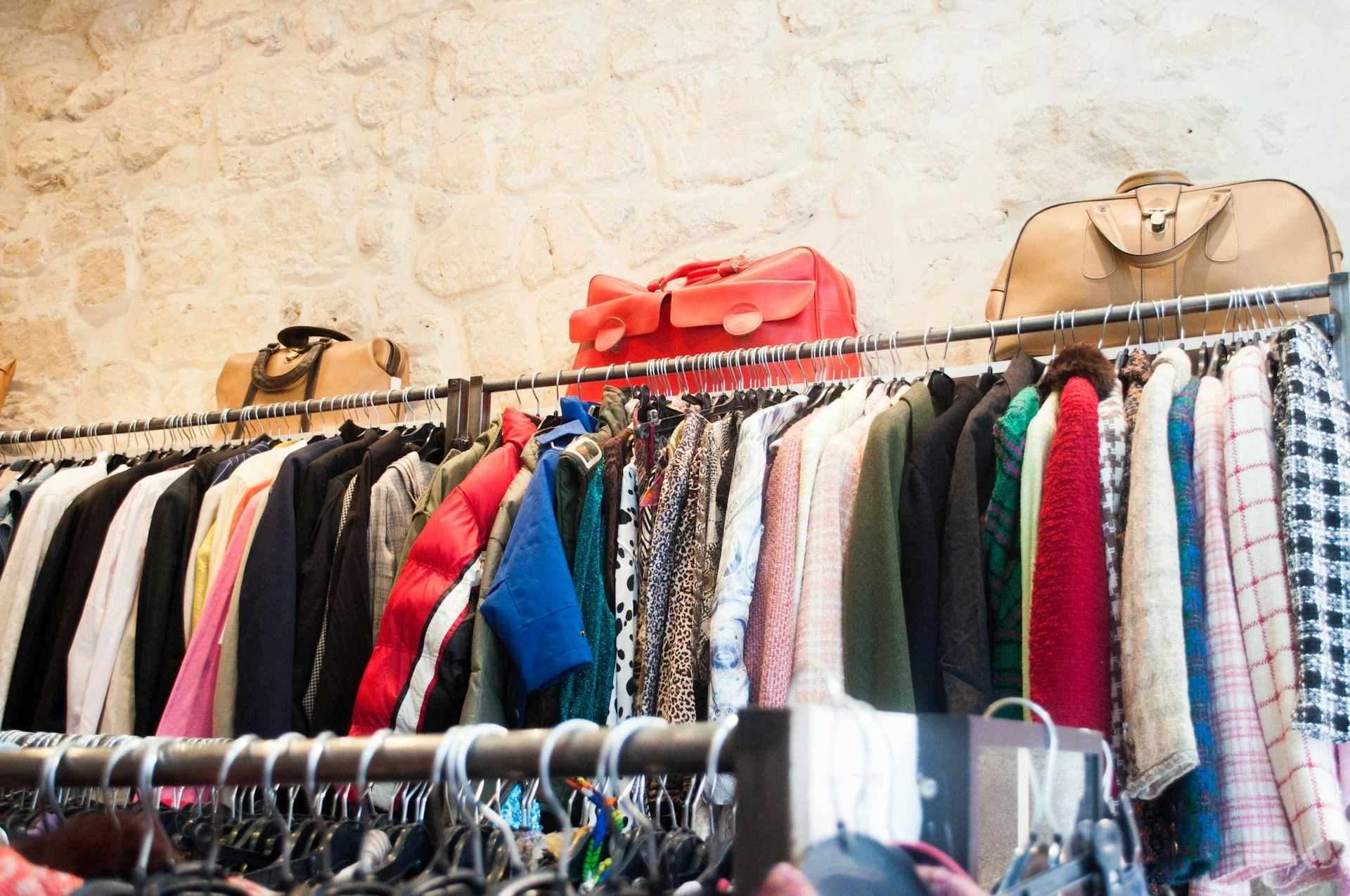
The biggest surprise for people entering the used clothing market is how much everything depends on details. Theoretically, you are buying “used clothing” but in reality, that term covers a huge range of quality and sales potential. One batch may be largely ready for immediate sale, another may require sorting through, and yet another may prove difficult to liquidate. And this is not because someone is trying to deceive someone else, but because the given assortment was not properly matched to the market where it is intended to be sold. This is exactly where the first important distinction appears: sorted and unsorted used clothing. The former offers greater predictability, because someone has already done the selection work. The latter is cheaper, but more unpredictable. In addition to that, the method of packaging also matters, contrary to appearances. Small bales are handled differently, because they are easy to unpack and sell in batches, while large bales require a different approach, where volume and fast turnover are what matter.
Step 1. Choosing the target market for a used clothing wholesaler
One of the foundations of the used clothing industry is the understanding that every batch of clothing is planned for a specific market rather than sold universally, something that every professional used clothing wholesaler understands very well. This results from a very simple mechanism. Different markets have completely different expectations regarding price, quality, and the type of clothing itself. What sells efficiently in one country may sit in a warehouse for weeks in another, generating unnecessary costs. That is why, already at the sorting stage, an American clothing mix is divided and directed to specific buyers. Such a strategy makes it possible to maximize the value of each batch while at the same time limiting the buyer’s risk.
This can best be seen in the example of the main export destinations. In Africa, functionality and price are important. The greatest demand is for lightweight clothing that can be worn every day in a warm climate. The goods must be well sorted and divided into specific categories, which makes further distribution easier. Pakistan, and South Asia more broadly, is a market where the logic of low price dominates. Both medium-quality mixes and items that in the USA would be classified as lower grade are sent there. This does not mean there is no demand – quite the opposite. It is a huge market, but one that requires a very precise match between price and quality. Latin America functions somewhat differently. Here, as in Africa, availability and price are important, but appearance and brand also begin to play a bigger role.
Recognition of American brands affects sales, which is why a well-selected mix can achieve better prices than in other regions. Europe, on the other hand, has the highest requirements. What goes there is primarily premium goods, well-preserved items, and often branded clothing. The end customer pays attention not only to condition, but also to fabric composition or cut. It is a market that guarantees high margins, but only when the selection is genuinely good. A consciously operating used clothing wholesaler invests in goods matched to a specific market, because only such an approach guarantees stable sales and predictable results.
Step 2. Sorting and grading in the used clothing industry
Are used clothing quality labels clear and consistent across all suppliers? It turns out – not necessarily. Terms such as Cream, Grade A, or Grade B are not fully standardized. Each sorting facility has its own tolerance thresholds and its own interpretation of what still qualifies for a given category. For one supplier, Grade A may mean goods ready for sale, while for another it may include items with visible signs of wear. Experienced buyers also know that the quality within the same category can vary depending on the season – items collected during spring “closet clean-outs” often outperform batches gathered in the middle of summer. That is why, when purchasing, it is not enough to know the category name. You need to understand what stands behind it in a specific sorting facility and in a specific month.
An equally important decision is choosing between sorted and unsorted clothing. Sorted goods are the result of prior selection – someone has already separated better items from weaker ones and assigned them to specific groups. Thanks to this, the wholesaler gains greater predictability. They know what to expect and can plan sales more effectively. Unsorted clothing, often referred to as credential, operates under entirely different rules. It is raw material delivered to the sorting facility without prior selection. On one hand, it provides access to items that have not yet been “picked through” and may potentially have higher value. On the other hand, it involves significantly higher risk, because the quality structure of such a batch is unpredictable. At container scale, the so-called “yield,” meaning the actual recovery rate, becomes crucial. When buying 20 tons of unsorted goods, you must account for a percentage of waste (dirty, damaged items or single shoes). Even a 5% difference in the amount of “waste” means one ton of goods that you paid for and must dispose of at your own expense.
If you need stable quality, sorted goods are the safer option. If you have sorting capacity and are aiming for higher margins, credential can be profitable – but only with extensive experience and a strong understanding of the specifics of the collection region. There is also one more often underestimated factor: the way the goods are described and sold. In this industry, it is very easy to encounter terms such as “premium mix” or “top quality,” which sound good but mean little without a precise specification. That is why professionals in the industry demand transparency. For full truckload contracts, the “open bag policy” should be standard – the possibility of visiting the sorting facility in person and randomly checking several bags from the batch before loading.
Step 3. Used clothing order specification
At this stage, you stop buying “used clothing” and start defining an actual commercial product. A well-prepared specification is the foundation if you want to effectively supply your business and ensure stable sales performance.
The order specification should cover several areas. The first is the assortment. It is not enough to say “mix”. You need to clearly define whether you are interested, for example, in a summer mix, cream mix, kids mix, or a specific category such as jeans or T-shirts. This is particularly important if your goal is branded used clothing wholesale, which allows you to stand out from the competition. A well-selected assortment may include both more classic products as well as overstock or end-of-line items that increase the overall value of the batch.
The second aspect is quality. Terms such as Grade A or B must be aligned with the standards of the specific sorting facility. It is worth specifying what percentage of the goods should be premium clothing and what portion should consist of lower grades. This is especially important if you want to build a more quality-focused offering and differentiate yourself from competitors, rather than competing solely on price.
The third area is seasonality and the climate of the target market. A container that is not aligned with the season quickly loses value. If you operate globally or plan to sell in different markets around the world, you must take into account not only the time of year, but also local preferences. This is where flexibility becomes important – a well-planned order allows you to respond more quickly to changes in demand.
Another aspect is packaging and internal logistics. Small bales are more flexible and easier to distribute, while large bales help reduce transport costs and improve operational efficiency. Waste should not be overlooked either. Every batch contains a certain percentage of items that will not be fully suitable for sale.
Step 4. Transport and Incoterms
At this stage, many people think that the most important decision has already been made, because the goods have been purchased. In reality, this is the point where costs can arise that are often underestimated or poorly allocated. The foundation is understanding the terms on which you are buying the goods – so-called Incoterms. These determine who is responsible for transport, who bears the risk, and at what point that risk transfers to the buyer. If you purchase under EXW (Ex Works) terms, you collect the goods directly from the supplier’s warehouse and the entire logistics process is on your side. This provides the highest level of control, but requires experience and a reliable freight forwarder. FOB (Free On Board) means that the supplier is responsible for delivering the goods to the port and loading them onto the vessel. From that point, the risk transfers to you. This is one of the most commonly used models when importing containers from the USA, as it allows responsibilities to be divided in a predictable way. CIF (Cost, Insurance and Freight), in turn, means that the supplier arranges sea transport and insurance to the destination port.
The second important element is the type of transport. Sea containers are the standard for shipments from the USA or Asia, as they allow large volumes to be transported at a low unit cost. In Europe, road transport dominates. However, weight optimization (payload) is crucial. Clothing in bales is very heavy, so it is easy to exceed the maximum permissible gross weight of a truck, which on international routes can result in significant fines and costly reloading during transit. In both cases, securing the goods remains critical. Used clothing is extremely sensitive to moisture. In sea transport, due to temperature fluctuations, the phenomenon of “container rain” occurs. Without professional moisture absorbers (desiccants) and a “Clean on Board” notation in the Bill of Lading, after several weeks of transit you may receive 20 tons of goods with a musty smell or visible mold. That is why experienced wholesalers, when selecting the right supplier, pay attention not only to the transport price, but also to:
the method of packaging (tightness and level of bale compression),
loading conditions and protection against moisture,
the number of free days at the port for document handling,
precise cargo insurance.
The final issue is the moment when responsibility is transferred. Depending on the Incoterms, either you or the supplier bears the risk of damage to the goods at a given stage. If this is not clearly defined, it is very easy to end up in a situation where it is unclear who is responsible.
All of this means that beyond the purchase itself, efficient management of the entire logistics chain becomes crucial. When exporting used clothing to markets in Africa, Asia, or Europe, it is necessary to properly match the mode of transport – both sea and land – and to select partners who can ensure stable pricing and operational conditions. Formalities are equally important. Depending on the destination, it is necessary to ensure a complete set of export documents, support in the customs clearance process, and often additional requirements such as fumigation or obtaining certificates of conformity required by specific countries (e.g., in the case of Kenya). We have been handling all of these aspects for years at A&E Clothing. Although they are less visible at the purchasing stage, they have a direct impact on the smooth flow of delivery and the final cost of the entire operation.
Step 5. Customs clearance and international requirements
The goods may be shipped correctly, but if the documents do not match or you fail to meet the requirements of a given country, the container will be held at the port. In the used clothing trade (most commonly classified as HS 6309), three documents are essential: the invoice, packing list, and bill of lading. If the weight, number of bales, or description of the goods differ between these documents, customs authorities may refer the container for inspection, which results in delays and additional fees. In addition, there are country-specific requirements. In some African countries, a certificate of conformity or a pre-shipment inspection may be required. In certain countries in Latin America or Asia, sanitary requirements may apply, such as documentation confirming fumigation.
The classification of the goods is also important. The difference between used clothing and so-called stock (i.e., new clothing from end-of-line collections) affects duties and how the goods are treated. If something is declared incorrectly, it may result in additional charges or delays in clearance. Time is also critical. A container that sits at the port generates costs every single day. Demurrage and detention are not theoretical terms – they are fees that can easily “eat up” your margin. That is why experienced wholesalers do not leave this to the last minute. They send documents to the customs agent in advance and prepare the clearance before the vessel arrives at the port. This shortens processing time and reduces risk.
Step 6. Cost calculation
You may have a reliable sorting facility and well-organized transport, but if you calculate costs incorrectly, the entire operation will become unprofitable. The most common mistake? Considering only the purchase price. In reality, the price of the container is just the beginning. To determine the true cost, you need to include everything that happens “along the way.” The first element is, of course, the cost of the goods, but immediately after that comes transport. Sea or road freight, port charges, documentation – these all contribute to the cost of delivering the goods to the destination country. It is also important to remember exchange rate risk. In transactions in USD or EUR, the difference in exchange rate between the day of ordering and the day of paying customs duties can eliminate several percentage points of your margin.
Another factor is duties and local charges. Depending on the country, these may be low or very significant. In addition, there are costs related to customs clearance, the customs broker, and possible inspections. The most frequently overlooked element is waste, meaning the portion of goods that you will not sell or will sell at a very low price. Every container has it. Sometimes it is a few percent, sometimes over a dozen – it all depends on quality and selection. Experienced operators calculate the so-called “Revenue per KG,” meaning how much revenue each kilogram generates after deducting waste. If you buy cheap unsorted goods, one ton of waste – on which you paid for loading, transport, and duties – significantly increases the cost of the remaining, good-quality clothing.
There is also local logistics – transport from the port to the warehouse, unloading, and possibly sorting on-site. This is also where the cost of “frozen capital” appears. The container is in transit for weeks, and during that time you cannot use your money. If you rely on external financing, interest costs also add to the cost of the batch. Only when you sum up all these elements will you know the actual cost per kilogram of clothing. Rarely is the cheapest container the most profitable, because it usually means:
higher waste and higher disposal costs,
slower stock turnover (so-called dead stock) that occupies warehouse space,
a lower final selling price and a more difficult competitive position.
On the other hand, better-sorted, more expensive goods may rotate faster and generate higher margins despite a higher purchase price. That is why professionals do not focus on the cost of the container, but on the final result after sales.
Choose A&E Clothing and build your advantage in the used clothing trade
Buying used clothing in bulk is rarely a one-time transaction – it is rather a process in which every stage matters. From market selection, through sorting and order specification, to transport and customs clearance – everything influences whether the goods will sell or remain in the warehouse. Moreover, today the biggest challenge is not access to goods itself, but the ability to properly match them to the market and the sales model. That is why choosing the right supplier plays a key role – one that can ensure consistent deliveries. A professional used clothing wholesaler does not operate randomly. It relies on data, experience, and relationships with suppliers, which allows it to offer a wide ассортимент, including branded used clothing wholesale as well as premium items that increase margins and attract customers. If you are looking for a truly reliable sorting facility, feel free to contact us!
Ready for your first container — with no surprises?
We handle the full process — sorting, transport, export documentation, customs clearance. Call or write and we'll work out the true per-container cost for your market.
FAQ – Frequently Asked Questions
We handle wholesale orders scaled to our customers’ business size. We help match batch size to the type of assortment ordered, logistics capabilities, and the market the goods are headed to. On our side, we have the capacity to handle orders of very large volumes.
Yes, we prepare such orders according to the customer’s expectations and a specification agreed in advance. Depending on the need, the goods can cover specific clothing categories, a chosen quality grade, an assortment mix, or Institutional Mixed Rags.
Yes. Road transport is used particularly for deliveries to European markets. When putting together a shipment, we take into account the vehicle’s permitted weight limits and how the clothing is packaged, so the available space is used as efficiently as possible, which helps optimize transport costs.
Every order we fulfill follows a specification agreed in advance. Based on our experience and knowledge of individual target markets, we always help match the assortment to specific needs. This matters especially when exporting to regions where expectations around price, quality and type of clothing are particularly specific.
We deliver to various export markets, including customers in Europe, Africa and Asia. Each of these markets naturally has its own distinct requirements regarding quality and type of assortment.
Yes. Countries such as Nigeria, Ethiopia and Ecuador ban the import of used clothing, and countries such as Rwanda and South Africa have introduced additional restrictions. At A&E Clothing, we stay current on the regulations in force in each country and help organize deliveries so that everything is handled in compliance with the law.