What does quality control of used clothing in a sorting facility involve?
- Used clothing quality does not mean the same thing to everyone
- How does a sorting facility assess a garment’s value in seconds? An efficient sorting process
- What factors determine the quality of used clothing?
- Why does brand determine higher clothing quality?
- The same item, different value – quality depends on the used clothing market
- The biggest mistakes in assessing used clothing quality
- How does quality control of sorted clothing impact your business?
Every garment that arrives at a sorting facility undergoes a quick, yet meticulous evaluation. Among other things, it is checked whether the fabric has not become thin and stretched after multiple washes, whether there are signs of wear in critical areas, whether the zipper works, and whether all buttons are present. The difference between good and poor selection often comes down to several to over a dozen percent of rejects. If you want to learn more about quality control of used clothing in a sorting facility, read the article below.
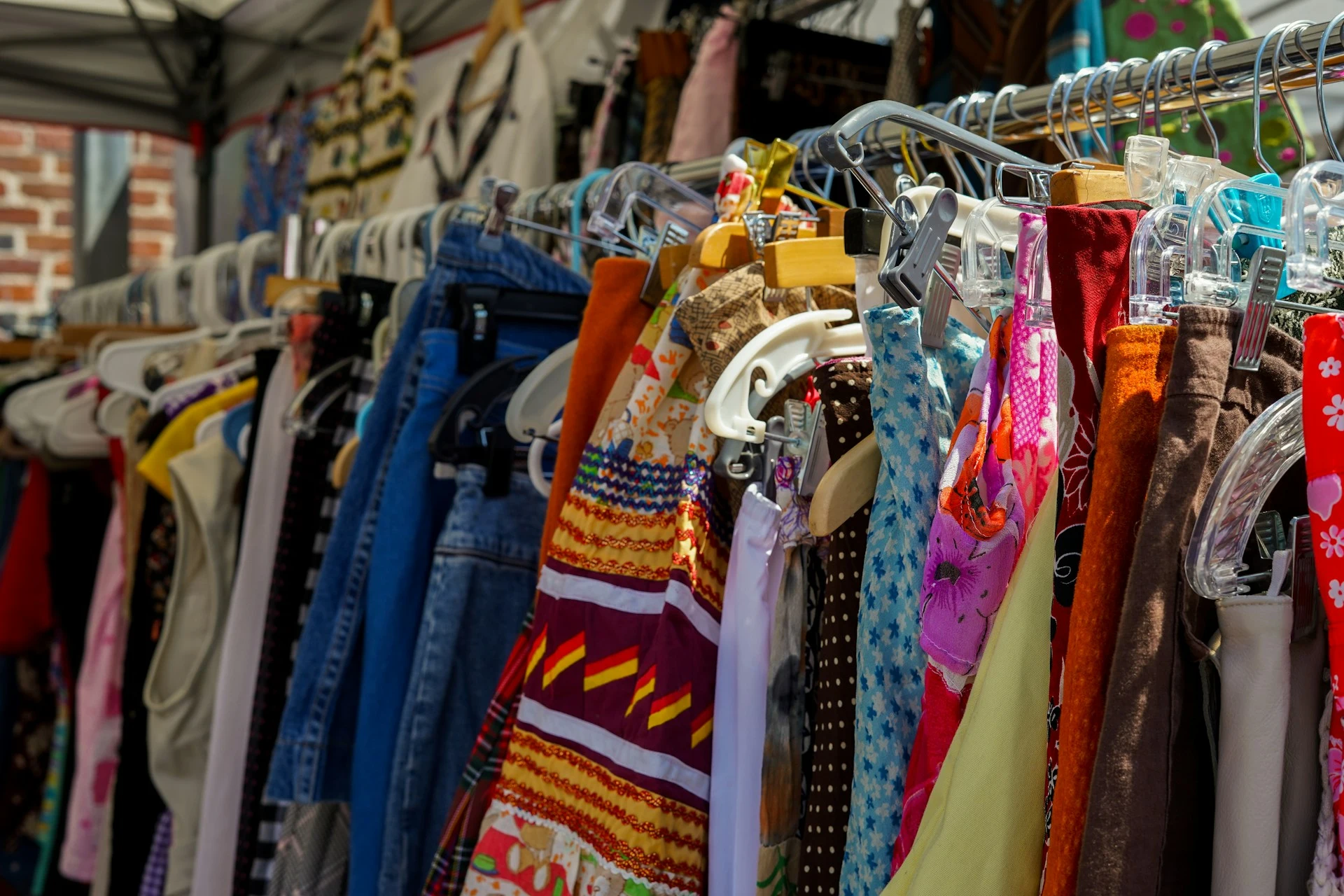
Used clothing quality does not mean the same thing to everyone
Cream, Grade A, or Grade B. The problem is that these designations are not uniform. In one sorting facility, Grade A may include items that are practically ready for sale. In another, it may include clothing with visible signs of use that still requires further selection. The differences can be significant and often only become apparent after opening the first bales. However, something else is often even more important. Quality in used clothing does not depend solely on the condition of the items, but also on where they are intended to be sold. The same product can have completely different value depending on the market. A slightly faded T-shirt may be difficult to sell in Europe, but in the African market it will be a standard, fast-moving product. On the other hand, a sweatshirt from a well-known brand with minor signs of wear will often sell faster than a new item from an unknown brand.
How does a sorting facility assess a garment’s value in seconds? An efficient sorting process
In a professional sorting facility, no one analyzes a single garment for a full minute. On the sorting line, decisions are made very quickly – often within 2–3 seconds. In that time, the sorter must determine whether the item has commercial value and which category it belongs to. This is the result of experience built over months, and often years, of work. An experienced sorter does not look at a garment “in general.” Their attention is automatically drawn to specific critical points:
armpits – checking for discoloration and signs of heavy use,
collar – whether it is stretched or dirty,
cuffs and elbows – whether they are worn through,
fabric structure – whether the material is still “substantial” or already thin and worn out.
Within a second, the worker also evaluates sales potential: does the item look like something someone would buy? Does it fit current trends? Does it have visual appeal? Visual memory is also very important. Sorters recognize brands, cuts, and fabric quality almost automatically. They know that a sweatshirt from a well-known brand will still sell even with minor signs of wear, while a similar item without a label will be assigned to a lower category.
Importantly, the same item may be assessed differently by two different workers. That is why the best sorting facilities in the used clothing industry do not rely on just one person. They use a so-called “double-check” system, where goods assigned to the highest category (e.g., Cream) pass through the hands of a second, most experienced specialist (the so-called over-sorter). This person makes the final decision on whether the item meets strict premium standards.
Sorting facilities rely on systems – regular training, physical quality reference samples displayed at workstations, and multi-stage internal control that ensures consistency. Each of these rapid decisions affects the value of the entire batch.
What factors determine the quality of used clothing?
The quality of used clothing is not a single characteristic. It is a combination of several factors that together determine whether a given item will be assigned to a higher category or end up in a low-priced mix. The first and most obvious factor is physical condition, but it is not only about major damage. Holes or tears are easy to spot. Much more important are subtle signs of wear that indicate how intensively an item has been used. Pilling, loss of fabric structure, or a “washed-out” color often determine a downgrade in quality. This evaluation must be carried out in full daylight, as only then are subtle yellowing of the fabric or small snags visible – details that can easily be missed under artificial lighting.
The material and its quality are also important. Thicker, dense cotton or solid denim holds up better over time than thin, synthetic fabrics. Two similar T-shirts may look almost identical, but one of them may be heavily worn (so-called fabric fatigue). The stability of the garment’s shape is also crucial. Lower-quality clothing tends to develop twisting seams after several washes. Such an item, even without holes, loses its commercial value because it simply looks poor on a hanger.
Completeness and functionality of components are equally important. A broken zipper in a jacket or a missing original button can downgrade a garment by two quality levels. These are small details, but they have a significant impact on sales – the end customer simply does not want to incur additional tailoring costs. There is also a factor that cannot be seen but can be smelled – odor. Even a branded item in perfect visual condition loses its Cream status if it carries the smell of moisture, mustiness, or cigarette smoke, as these odors are nearly impossible to remove in large-scale resale.
Brand and overall appearance also play a major role. In practice, a lightly used item from a well-known brand will often be graded higher than a new item without a label. Why? Because it is easier to sell. In this industry, quality is not only about condition, but also about sales potential and how current the style is. The garment must fit current trends; an item in perfect condition but with an outdated cut (that is not considered desirable vintage) will be graded lower than a modern piece with slight signs of wear.
Finally, there is something difficult to measure but extremely important – the so-called “sales look.” Does the garment look attractive? Will it quickly regain its shape after being taken out of a bale? All of these factors together define quality. That is why two items that appear similar at first glance can end up in completely different categories and have entirely different market value.
Why does brand determine higher clothing quality?
In theory, quality should result from the condition of the garment. In reality, however, in the used clothing industry the brand is just as important – and often even more important. Consider two items:
the first: a new, unworn sweatshirt with no label, made of thin material,
the second: a lightly used sweatshirt from a well-known brand, with minimal signs of wear.
Intuitively, one might assume the first is better because it is new. In practice, however, the second will be much easier to sell. Why? Because a brand builds trust and guarantees predictability. The end customer knows what to expect in terms of fit, color durability, and sizing. Even if the garment is not perfect, it still retains high market value.
This is clearly visible in sorting facilities. Items from well-known brands are more often assigned to higher categories and allow for a higher price per kilogram. In professional wholesale trade, branded garments are often referred to as “sales drivers.” They attract the customer’s attention to a bale or container and help the rest of the goods – so-called no-name items – sell faster. When you see a few branded “gems” on top of a bale, you can assume that the rest of the clothing also comes from “better neighborhoods” and will have a higher yield.
This is particularly important in markets such as Latin America or Europe, where recognition of premium brands directly impacts margins. It is also important to remember the geography of brands. In Latin America, American brands such as Gap or Tommy Hilfiger dominate. In Europe, Levi’s and Carhartt have strong commercial value, while in Africa the brand itself is of much less importance.
That is why experienced buyers do not look only at the percentage of Cream or Grade A. They also assess whether the batch contains an appropriate share of branded items. A separate category is vintage clothing – in this case, an iconic brand from the 1990s can make a washed-out and technically “worn” T-shirt reach the highest price category, because its collectible value outweighs its physical condition.
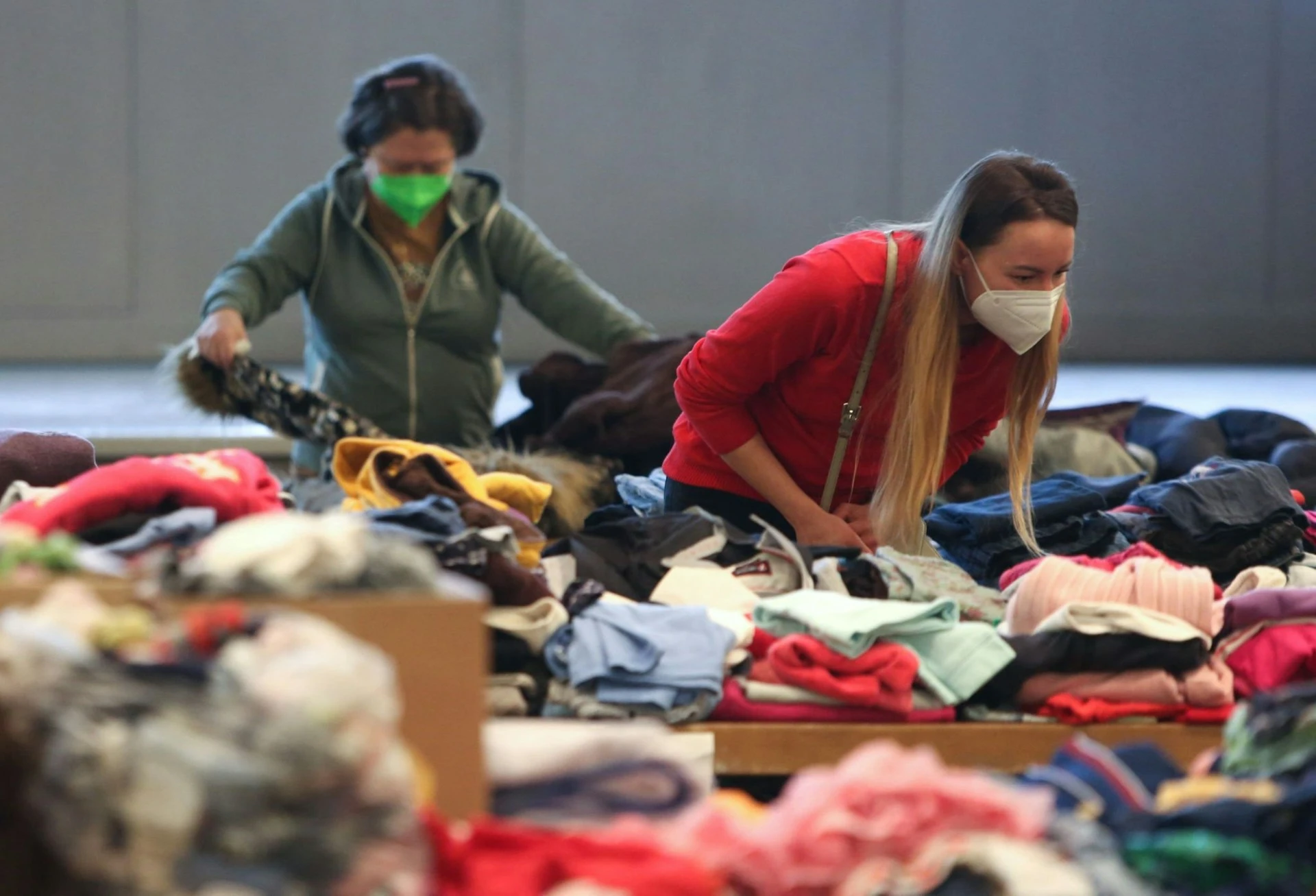
The same item, different value – quality depends on the used clothing market
There is no such thing as universally “good” used clothing. Whether a given item is valuable depends primarily on where it will be sold – what the requirements of a particular market are and what the expectations of the used clothing wholesalers who will distribute it further look like. A T-shirt with a slightly washed-out color and minor signs of wear:
in Europe may fall into a lower category and sell slowly,
in Africa will be a normal, fully functional everyday product,
in Pakistan may become part of a low-cost, fast-moving mix.
It is exactly the same product, but with three different values. In the African market, functionality and price are key. Clothing needs to be practical and lightweight. Fabric weight is extremely important – in a hot climate, thin cotton is often more valuable than heavier material that would be considered premium in Europe. That is why used clothing sorting facilities prepare goods as ready-to-sell solutions – sorted, lightweight mixes that can be introduced directly into the market. Well-matched quality translates directly into fast turnover. In Pakistan and more broadly in South Asia, price is even more important, but size demographics also play a key role. The market accepts a wider range of quality, but the value of a batch decreases if it contains too many large sizes. In this segment, end-of-line stock items also often appear, complementing the offer and increasing the attractiveness of the entire mix. Proper product matching by the supplier is crucial here to meet the real needs of the market. Latin America sits somewhere in between. Price still matters, but appearance and brand are becoming increasingly important. Value is defined not only by the condition of the garment, but also by culture and lifestyle. Proper preparation of goods for reuse within a specific cultural context is essential. Europe, on the other hand, is the most demanding market. Here, condition, material, cut, and brand all matter. Primarily premium or very well-preserved items are directed to this market. The margin for error is smaller, but in return higher margins are possible – provided that the quality is consistent and aligned with the season and customer expectations.
Therefore, quality in used clothing is not an inherent feature of the garment itself. It requires alignment with climate, demographics, and the cultural expectations of the customer. That is why professional sorting facilities do not evaluate items in isolation. They immediately “see” whether a given piece will meet the requirements of a specific market.
The biggest mistakes in assessing used clothing quality
In the used clothing industry, mistakes in quality assessment do not end with “worse goods.” They translate directly into money – tied-up capital, slow turnover, and sales difficulties. Interestingly, most of these mistakes are repeated regularly, especially by less experienced buyers and wholesalers who are just building their supply sources.
The first mistake is buying based on the label – blindly trusting designations such as Cream or Grade A. As we already know, these terms are not standardized. Without knowledge of a specific sorting facility and how it operates, you are buying a label, not quality. A common error here is also judging an entire container based on a single, sample bale prepared by the supplier. A professional buyer requires random opening of bales from different parts of the batch to assess the statistical average, not a “showcase” prepared for sale.
The second issue is ignoring waste. Every batch contains unsellable items. If you do not account for this, your margin disappears very quickly. Remember that waste is a triple cost: you pay for it in the purchase price, you pay for its transport and duties, and finally you have to pay for its disposal – which, at container scale (e.g., 2 tons of waste), becomes a significant logistical expense.
Another mistake is failing to match the goods to the market and the season. Buying without considering sea transit time is a recipe for losses. If you order a summer container in May, after 6–8 weeks of shipping and customs clearance, the goods will arrive in the middle of summer when the market is already thinking about autumn. You end up with inventory that is “late” from the very first day in your warehouse.
Another common issue is overestimating cheap goods. A low purchase price is tempting, but in reality it usually means higher waste, more sorting work, and slower sales. As a result, such purchases rarely turn out to be profitable. A separate problem is the lack of control over the batch structure. Even good-quality clothing loses value if it is poorly mixed (no size range or random category mix). That is why professionals look for consistency – it is better to have a supplier with stable, average quality throughout the year than to rely on one-off opportunities that cannot be replicated for your customers.
How does quality control of sorted clothing impact your business?
At first glance, quality control may seem like just one of the stages in a sorting facility’s operations. In reality, it is what determines whether the goods will start generating profit from day one or sit in a warehouse for weeks. Well-prepared clothing primarily means predictability. A used clothing wholesaler knows what to expect from a delivery – what the level of waste will be, how quickly the goods will sell, and at what price. This allows for better planning of purchases and stock turnover. Consistency is key here – professional quality control ensures that the tenth container from the same supplier has the same structure as the first, enabling you to build a stable base of loyal customers. High-quality goods also mean:
fewer complaints and returns, which generate additional logistics costs,
faster turnover and better cash flow,
a higher final price per kilogram accepted by the market due to lower risk,
time savings for your customers—“shelf-ready” goods (ready for sale) are worth significantly more than those requiring additional processing.
Poor selection works in exactly the opposite way. Even if the purchase price was attractive, the amount of waste increases – waste that you must pay to dispose of – and the warehouse starts to fill up with unsellable goods. Capital stops working, and you lose your reputation as a reliable supplier. That is why experienced buyers take a broader view. They do not evaluate only the price of the offer, but above all how a given batch will translate into sales results. A well-functioning sorting facility delivers not just clothing, but ready-made solutions – goods tailored to the market and based on solid data regarding the composition and size distribution of each batch. It separates items with real potential from those that only appear to be good at first glance. That is why we invite you to explore our offer and get in touch – we will be happy to answer your questions and clear up any doubts.
Want a supplier whose 10th container looks exactly like the 1st?
At A&E Clothing every grade follows a fixed specification and Cream goes through an additional double-check. Let's start with a test batch — call or write.
FAQ – Frequently Asked Questions
Every item goes through manual selection. We assess its condition, appearance, material, completeness and sales potential. We look for both visible damage and less obvious signs of wear that can affect how appealing a product is. This ensures that each category only receives items that meet defined quality standards.
During sorting we focus mainly on the quality and condition of the fabric, seams, fastenings, zippers, buttons, collars, cuffs, and areas particularly prone to wear. We also check items for stains, discoloration, pilling and shape deformation. Thanks to extensive experience, our team can assess within seconds, and with great accuracy, which category a given item should go to.
All items initially qualified for the premium category undergo an additional check. This minimizes the risk of items in that batch falling short of our established standard. As a result, our customers buying sorted clothing from the cream category can be confident it will meet expectations, with consistent quality in every order.
Our quality control covers not just appearance but odor too. We know that strong, unwanted smells such as mustiness or cigarette smoke are hard to remove and can lower a product’s resale value.
Quality control gives our customers greater predictability of purchase, and in turn of sales potential. It also means not having to spend resources sorting clothing in-house. It further minimizes the risk of unsellable items ending up in a batch.
The price per kilogram, and even the name of the quality category, does not tell you what is actually in each batch. Two offers at a similar price can differ in selection standards, product mix, the share of items ready for direct sale, and the amount of reject. That is why choosing a supplier means looking beyond price to the quality standard you get in return. We focus on making sure the quality-to-price ratio delivers the best value for our customers.