How does wholesale import of used clothing from the USA to Serbia work? A low-competition market
- Key takeaways
- How big is the Serbian used clothing market?
- Why is Serbia a low-competition market?
- What is the customs status of goods shipped from Poland to Serbia?
- What does the process look like, from the sorting facility in Poland to a warehouse in Serbia?
- What duties does the Serbian customs administration charge?
- Serbia as an entry point to neighboring Balkan markets
- Which order format works best when starting a partnership?
- Which quality class should you choose for the Serbian market?
- The most common mistakes importers make when entering a new market
- How to choose a supplier for the Serbian market?
Importing used clothing from the USA into Serbia involves customs clearance, since Serbia is not a member of the European Union. The goods are sourced 100% from US collection - sorting and packing in Poland alone doesn't confer EU preferential origin status, so on entry into Serbia the standard third-country (MFN) duty rate applies, not the preference under the EU-Serbia free trade agreement. Transport goes by road, with no need for a sea port. The Serbian used clothing trade market has lower content and commercial competition than African or Western European markets - below you'll find how the import process works and which order format makes sense to start with.
Key takeaways
- Serbia is not an EU member - importing from Poland requires customs clearance, unlike shipments to EU countries.
- The goods are sourced 100% from US collection: sorting and packing in Poland doesn't confer EU preferential origin status, so the standard third-country (MFN) duty rate applies when importing into Serbia.
- The standard VAT rate in Serbia is 20%, charged on the CIF value plus duty.
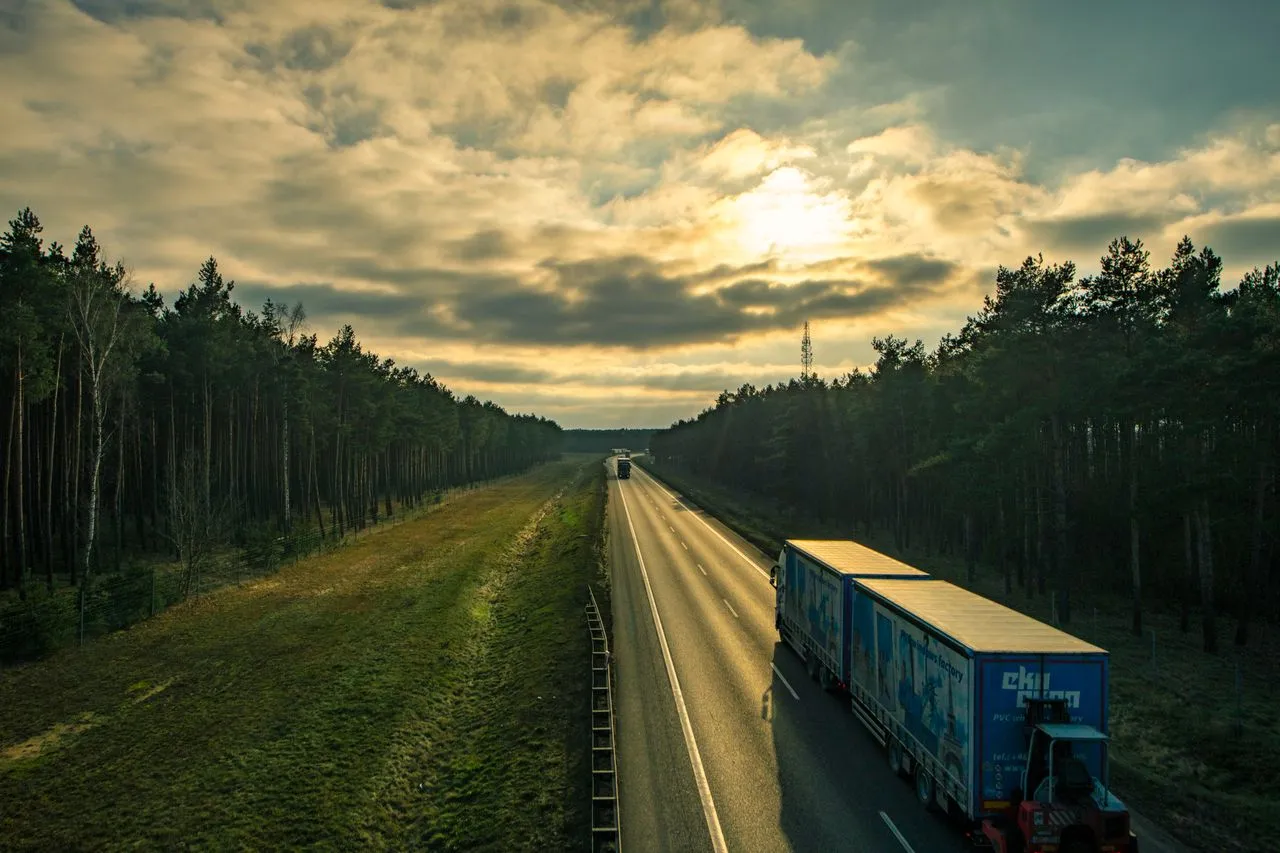
- Road transport from Poland is the natural delivery route: Serbia has no access to a sea port.
How big is the Serbian used clothing market?
The Serbian used clothing retail trade market is worth roughly EUR 32.3 million in 2026, with annual growth of around 17.4% (IBISWorld) - a high growth rate compared with more established Western European markets.
For comparison, the entire Serbian wholesale clothing, textile, and footwear trade market is worth roughly EUR 562.6 million in 2026, and the retail clothing, footwear, and leather goods market is worth roughly EUR 1.8 billion, with annual growth of around 20.9% and strong growth in the number of new businesses (2,500 companies, up 34.1% between 2020 and 2025).
This data points to a young, fast-growing, and still fragmented market - no single business holds a market share above 5%, meaning there's no dominant player dictating pricing terms.
Why is Serbia a low-competition market?
The Serbian used clothing trade market is growing, but has less established content and commercial infrastructure than Western European or African markets with a longer import history. This creates room for an importer entering as one of the first in the region to build a position.
For a regional distributor, this means in practice:
- Less price pressure from established, large importers that have been active in this market for years.
- The chance to build relationships with local retailers before more competitors arrive.
- A market still forming its quality preferences, which gives flexibility in choosing an assortment class to start with.
A used clothing wholesaler planning to enter the Serbian market can use this moment to build a lasting customer base, instead of competing on price in already-saturated markets.
What is the customs status of goods shipped from Poland to Serbia?
Serbia is not a member of the European Union, so goods shipped from the sorting facility in Poland go through standard customs clearance on entry into Serbia, unlike shipments to EU countries, where goods already circulate as EU goods with no additional clearance.
Serbia has a Stabilisation and Association Agreement (SAA) with the European Union, which provides for preferential duty rates for goods of EU origin. However, used clothing sorted by A&E Clothing is sourced 100% from collection in the United States - under the origin rules that apply in free trade agreements (including the SAA's protocol on rules of origin and the PEM convention), sorting, classifying, cleaning, pressing, or repacking goods alone is not considered sufficient processing to confer EU preferential origin status. In practice, this means the goods don't qualify for the SAA preferential duty rate and, on entry into Serbia, are treated as goods originating from a third country (the USA), subject to the standard third-country duty rate (MFN - Most Favoured Nation) under Serbia's customs tariff.
Serbia's customs tariff is harmonized with the EU's Combined Nomenclature (CN), which simplifies classifying the goods, though it doesn't affect the duty rate in this case.
Practical implications for the importer:
- Duty is charged on the CIF value (cost of goods + insurance + freight) at the standard third-country (MFN) rate, under Serbia's customs tariff.
- VAT (referred to in Serbia as PDV) is charged at the standard rate of 20%, on the CIF value plus import duty.
- Customs clearance requires a declaration filed by a licensed customs agent along with full documentation accompanying the shipment.
Disclaimer: the exact MFN duty rate for the specific goods heading (HS code 6309) in the current Serbian customs tariff has not been verified against an official source - it's worth checking with a licensed customs agent in Serbia before a first order.
What does the process look like, from the sorting facility in Poland to a warehouse in Serbia?
Importing used clothing from the USA into Serbia follows several stages, some of which differ from the process described for the German market because of Serbia's customs status.
- Inquiry and assortment selection. The importer specifies the preferred quality class and order volume - pallet or full container/TIR trailer.
- Individual quote preparation. Price depends on the class of goods, volume, and delivery direction - agreed individually upon inquiry.
- Order assembly at the sorting facility in Poland. Goods are sorted according to the ordered quality class.
- Preparing trade documentation. An invoice, packing list, CMR transport document, and a disinfection and disinsection certificate for the goods (referred to in Serbia as potvrda o dezinfekciji) - Serbian sanitary inspection requires this document for clearing used clothing.
- Road transport from Poland to Serbia. By TIR trailer or in pallet format, depending on order volume.
- Customs clearance at the Serbian border. Declaration filed by a licensed customs agent, payment of duty (unless a preference applies) and VAT.
- Pickup of goods by the importer. Once clearance is complete, the goods go to the importer's warehouse or directly to distribution points.
Importers interested in overseeing quality can use the option of a pre-shipment inspection or presence during loading at the sorting facility in Poland - a practical solution for a first order.
What duties does the Serbian customs administration charge?
Importing used clothing into Serbia involves two main charges: import duty and VAT (PDV), both charged on the CIF value of the shipment.
- Import duty. Charged under Serbia's customs tariff. The goods are sourced from US collection, and sorting in Poland doesn't change their origin status - the standard third-country (MFN) rate applies, not the preference provided for goods of EU origin.
- VAT (PDV). Standard rate of 20%, charged on the CIF value plus import duty.
- Customs clearance fees. Standard administrative fees and customs agent service charges.
Disclaimer: duty rates may change - before calculating order profitability, verify the current MFN rate for HS code 6309 and the documentation requirements (including sanitary ones) with a licensed customs agent in Serbia.
Serbia as an entry point to neighboring Balkan markets
Serbia holds a central position in the Balkans, with road access to Bosnia and Herzegovina, Montenegro, North Macedonia, and Albania. An importer building regional distribution can use a Serbian warehouse as a consolidation point for further road deliveries to neighboring countries.
The practical implications of this location:
- A single shipment from Poland to Serbia can supply a warehouse serving several Balkan markets, reducing transport cost per unit of goods.
- Serbia is a member of CEFTA (the Central European Free Trade Agreement), which can facilitate further trade with other economies in the region. This, however, applies to goods with an origin status that qualifies for such preferences, which requires a separate analysis for each specific case.
- Building out a distribution network in the Balkan region benefits from a single central point for clearance and storage of goods.
Disclaimer: the rules for re-exporting goods from Serbia to other CEFTA economies, and any potential duty preferences, depend on the goods' origin status and the specific trade rules involved. Because clothing sorted in Poland retains US origin (see the section on customs status above), every re-export scenario requires separate verification with a customs agent.
Which order format works best when starting a partnership?
Entering a new market like Serbia is worth starting with a smaller order format - it lets you test demand for a specific quality class without committing full capital to a large volume.
| Order format | Characteristics | Best for |
|---|---|---|
| Pallet order | Smaller volume, faster to test assortment in a new market | Importers entering the Serbian market for the first time |
| TIR trailer / full container | Full optimization of road transport cost per unit of goods | Distributors with an established sales channel in the region |
The pallet format on a first order lets you verify which quality class - Grade A/B or Premium/Cream - best matches local buyer preferences, before moving to a larger volume.
Price depends on the class of goods, order volume, and delivery direction; we prepare an individual quote for importers upon inquiry, regardless of the format chosen.
Which quality class should you choose for the Serbian market?
The Serbian market, still forming its quality preferences, gives the importer flexibility in choosing an assortment - both Grade A/B and Premium/Cream have their place, depending on the sales channel.
- Grade A/B - clothing in good condition (A) or with more visible signs of wear (B), baled at 100 lbs / 45 kg. A good base for regional wholesalers serving a broad price segment.
- Premium/Cream - carefully selected clothing in very good condition, packed in bags of 55 lbs / 25 kg. Works well when building an offer for higher-positioned stores.
- Mixed Rags - a mix with visible defects, a different market use than retail clothing sales - don't use this class interchangeably with Grade A/B or Premium/Cream.
Don't use the class names interchangeably - each has a different bale weight and a different market destination, which directly affects the importer's margin calculation.
The most common mistakes importers make when entering a new market
Importers testing the Serbian or Balkan market for the first time tend to make a few recurring mistakes that are easy to eliminate with proper preparation.
- Wrongly assuming preferential duty for goods sorted in the EU. Sorting and packing in Poland doesn't confer EU origin status on the goods - the order profitability calculation should account for the standard third-country (MFN) duty rate, not the SAA preference.
- Too large a volume when starting in an untested market. The pallet format lets you assess demand for a specific quality class without committing capital to a full road shipment.
- No partnership with a licensed customs agent before a first order. Navigating Serbian customs and sanitary procedures without an agent's support increases the risk of declaration errors and delays.
- Underestimating the role of local quality preferences. A market still forming its preferences requires a flexible approach to choosing assortment classes, not a top-down order structure copied from other markets.
- Planning re-export to neighboring countries without verifying origin rules. Retaining preferential customs status for further distribution within the CEFTA region requires separate verification - it cannot be assumed automatically.
How to choose a supplier for the Serbian market?
Choosing a used clothing supplier for the Serbian market should take into account not only the quality of the goods, but also logistics efficiency for exports outside the EU and the ability to prepare complete trade and sanitary documentation.
Criteria for evaluating a supplier for this destination:
- The ability to prepare complete customs documentation accompanying the shipment.
- A used clothing sorting facility located within the European Union - shortens the road transport route to Serbia and simplifies logistics compared with importing directly from the USA.
- Flexibility in order format - the ability to order by pallet when entering a new market.
- The option of a pre-shipment inspection or the importer's presence during loading.
A&E Clothing has operated a sorting facility in Poland since 2021, built on the same quality standards as the facility in the USA - the EU location makes the used clothing trade easier on Balkan routes, including Serbia, compared with importing directly from the USA.
FAQ
Yes. Serbia is not an EU member, so goods shipped from Poland go through standard customs clearance at the Serbian border - unlike shipments to EU countries.
No. The goods are sourced 100% from US collection - sorting, cleaning, and packing in Poland are not considered sufficient processing to confer EU origin status. On import into Serbia, the goods are subject to the standard third-country (MFN) duty rate, not the preference provided under the SAA for EU-origin goods.
The standard VAT (PDV) rate in Serbia is 20%, charged on the CIF value of the shipment plus import duty.
Serbia is a landlocked country, so used clothing from Poland is transported by road - by TIR trailer or in pallet format, with no need for a sea port.
Yes, the pallet format lets you test demand for a specific quality class without committing capital to a full transport volume - especially useful when entering a new market for the first time.
The Serbian market is still forming its quality preferences, so it's worth testing both Grade A/B and Premium/Cream in a smaller volume to assess which class better suits local buyers.
The Serbian market has less established commercial and content infrastructure than Western European or African markets with a longer import history - this creates room for importers entering at an early stage of this market's development to build a position.
The Serbian used clothing retail trade market is worth roughly EUR 32.3 million in 2026, with annual growth of around 17.4% (IBISWorld). It's a young and still fragmented market - no single business holds a market share above 5%.
Serbia's central location and its CEFTA membership make it possible to use a Serbian warehouse as a consolidation point for further road distribution to Bosnia and Herzegovina, Montenegro, or North Macedonia. Because goods sorted in Poland retain US origin status, any duty preferences for such re-exports require separate verification with a customs agent - they should not be assumed automatically.
Customs clearance requires a declaration filed by a licensed customs agent operating in Serbia - the importer should establish a partnership with such an agent before a first order to ensure duty and VAT are settled correctly.
Testing a new export market? We'll help you match the goods class and order volume to the scale of your business.
Ask about partnership terms - we'll respond as soon as possible.