Used clothing from the USA for german retail - vintage and streetwear
- Key takeaways
- How big is the German used clothing market?
- Why is demand for vintage and streetwear growing in Germany?
- What does the process look like step by step, from the sorting facility in Poland to a store in Germany?
- Importing through Poland or directly from the USA - which is more cost-effective?
- What does the documentation look like for imports from the USA to Poland and onward distribution to Germany?
- What labeling requirements apply when reselling in Germany?
- Which order format works best for the German market?
- Seasonality of demand - when to order which assortment?
- Which quality class should you choose for German retail?
- The most common mistakes importers make when entering the German market
- How to choose a supplier for the German market?
The German used clothing market is the largest recommerce market in Western Europe, with growing demand for vintage and streetwear - segments where brands like Nike and Levi's hold strong resale value. Imports from the USA go through A&E Clothing's sorting facility in Poland, which means the goods enter Germany as part of intra-EU trade, with no additional customs clearance at the PL-DE border. Below you'll find how demand, documentation, and typical order formats look.
Key takeaways
- The German used clothing retail market is worth roughly EUR 2.3 billion (IBISWorld, 2026 forecast) - the largest market of its kind in Western Europe.
- The vintage and streetwear segments show growing demand, especially for highly recognizable brands - Nike, Levi's, and other American labels.
- Goods sorted in Poland enter Germany as part of intra-EU trade, with no additional customs clearance at the PL-DE border.
- Pallet orders (LCL, smaller volumes) are standard when serving the German market, alongside full containers.
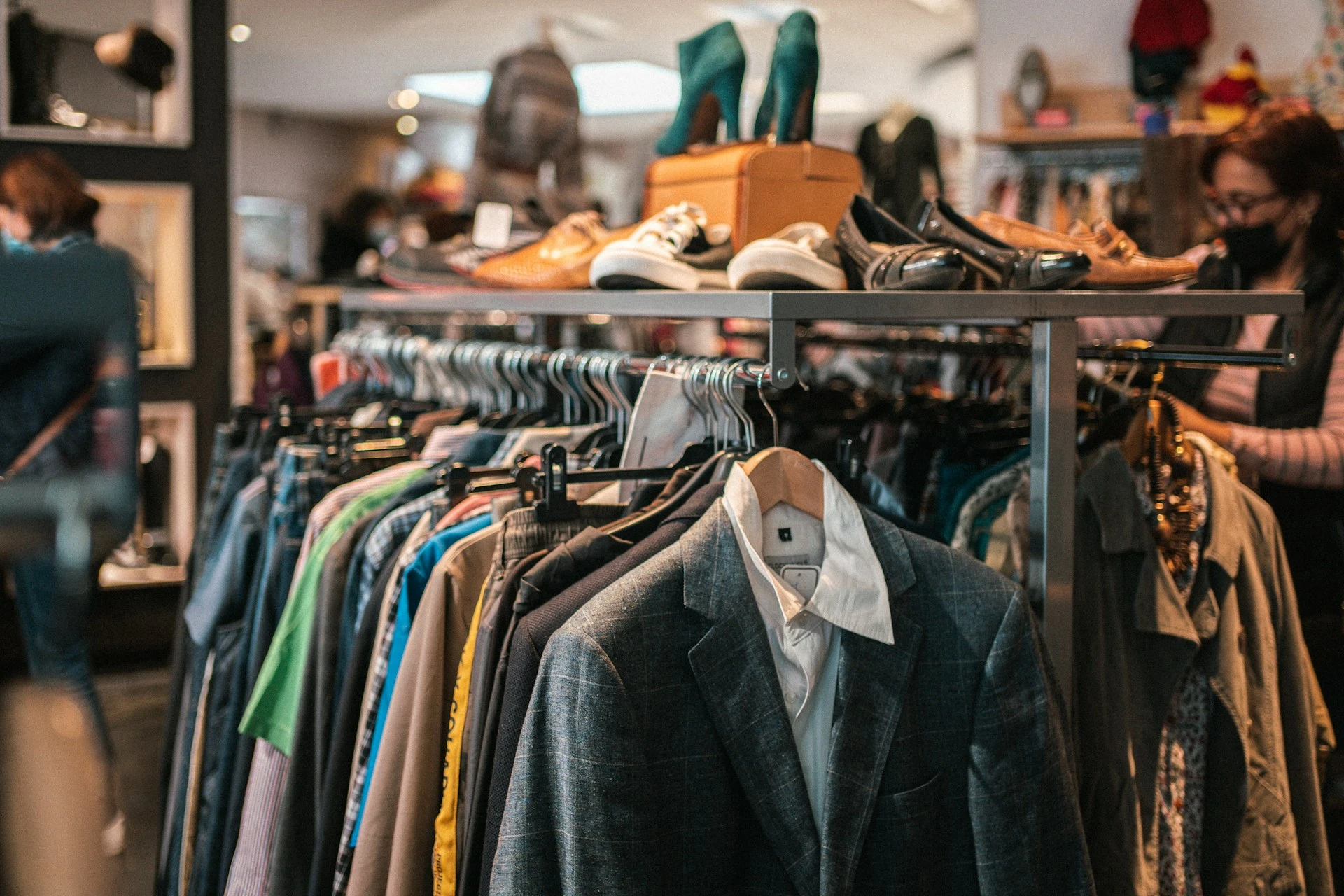
How big is the German used clothing market?
The German used clothing trade market is worth roughly EUR 2.3 billion according to IBISWorld's 2026 forecast; it's the largest market of its kind in Western Europe, served by more than 11,600 businesses operating in this segment.
The market is driven by growing consumer interest in secondhand fashion, stemming from both environmental awareness and price pressure in the apparel segment. The broader recommerce market in Germany - which also includes electronics and other categories - reached roughly USD 6.51 billion in 2025, with growth forecast to around USD 9.38 billion by 2029.
For an importer, this means a mature but still growing market, with established sales infrastructure (brick-and-mortar stores, online platforms) and stable demand that doesn't depend on a single distribution channel.
Why is demand for vintage and streetwear growing in Germany?
Demand for vintage and streetwear is growing in Germany because consumers increasingly treat secondhand clothing as a deliberate style choice, not just a cost-saving one, and American brands with a recognizable retro aesthetic maintain strong resale value.
This segment has several features that matter to an importer:
- Brands with established collector value - Nike, Levi's, and other American brands with a long history are sought after by buyers building looks inspired by Y2K, streetwear, or Americana.
- Higher acceptance of unit price - in the vintage segment, retail customers accept a higher seller margin in exchange for the product's uniqueness and history.
- Seasonal rotation tied to trends - demand for specific clothing types (e.g. denim jackets, hoodies, tracksuits) shifts seasonally, requiring flexibility in assortment selection.
Used clothing from the USA is a particularly valued raw material in this segment; American collection includes a large share of sportswear and streetwear brands, which hold desirable collector status in Europe.
What does the process look like step by step, from the sorting facility in Poland to a store in Germany?
Supplying a German store with used clothing from the USA follows several stages, each affecting order fulfillment time differently.
- Inquiry and assortment selection. The importer specifies the preferred quality class (Premium/Cream or Grade A/B) and the order format: pallet or full container.
- Individual quote preparation. Price depends on the class of goods, volume, and delivery format, agreed individually upon inquiry, without publishing a price list.
- Order assembly at the sorting facility in Poland. Goods collected in the USA are already sorted and packed according to the ordered quality class.
- Preparing trade documentation. An invoice, packing list, and CMR transport document accompany the shipment - no additional customs documentation is needed, since the goods already hold EU status.
- Road transport from Poland to Germany. Depending on the recipient's location in Germany, transport usually takes a few days, much shorter than sea freight directly from the USA.
- Pickup of goods by the importer. After delivery, the goods go straight to the importer's warehouse or store, ready for retail sale.
Importers interested in overseeing quality can use the option of a pre-shipment inspection or presence during loading at the sorting facility in Poland; this is a practical solution for a first order, while both parties are still building trust in the process.
Importing through Poland or directly from the USA - which is more cost-effective?
Importing used clothing from the USA through the sorting facility in Poland shortens delivery time to Germany and simplifies documentation compared with importing directly from the USA to a German port.
| Criterion | Import through the Poland sorting facility | Direct import from the USA to Germany |
|---|---|---|
| Customs status of the goods | EU goods - no clearance at the PL-DE border | Requires customs clearance at the EU's external border (e.g. at the Port of Rotterdam/Hamburg) |
| Transport time to the importer's warehouse | A few days by road from Poland | Several weeks by sea, plus clearance time |
| Order format | Pallet (LCL) or full container | Usually requires a full container for sea freight to be cost-effective |
| Documentation | Invoice, packing list, CMR | Additional customs documentation and HS classification on entry into the EU |
This difference matters in practice especially for smaller and mid-sized German importers who want to test new assortment segments (e.g. entering the Premium/Cream category) without committing capital to a full container shipped directly from the USA.
What does the documentation look like for imports from the USA to Poland and onward distribution to Germany?
Goods sorted by A&E Clothing are sourced 100% from the United States and clear customs on entry into the European Union, in Poland, where the client's sorting facility is located. Further distribution to Germany then takes place as intra-EU trade, with no additional customs clearance at the PL-DE border, in line with the principle of free movement of goods within the European Union.
For a German importer, this means a simpler logistics process than importing directly from outside the EU:
- Goods entering Poland go through standard customs classification (HS code 6309 - used clothing and other used articles) and clearance at the EU's external border.
- Transport from Poland to Germany takes place under intra-EU transport rules, with no duty or additional customs documents.
- The importer in Germany receives the goods with complete trade documentation (invoice, packing list, CMR transport document).
Sales from the Polish A&E Clothing entity to a German taxpayer registered for EU VAT are settled as an intra-Community supply of goods (ICS) at a 0% VAT rate - the reverse charge mechanism. The German recipient accounts for the tax in their own return as an intra-Community acquisition of goods (ICA), which simplifies settlement and doesn't burden the importer's cash flow with VAT paid upfront at clearance.
Disclaimer: the customs classification and rates applicable when goods enter the EU may change. Duty on goods entering Poland is paid by A&E Clothing, not the importer in Germany - it's worth verifying the exact current rate in the TARIC system or with a licensed customs agent.
What labeling requirements apply when reselling in Germany?
Selling used clothing in Germany is subject to general EU rules on consumer product information, including textile labeling and product safety regulations. The scope and application of these rules to used goods varies depending on the sales channel (brick-and-mortar store, online platform) and how the goods are presented as "used" or "secondhand".
Disclaimer: the exact scope of labeling obligations for a specific sales channel is worth verifying with a local legal advisor before launching sales; regulations and their interpretation by national market surveillance authorities can vary and change.
Which order format works best for the German market?
We serve the German market in both container and pallet formats. The choice depends on the importer's scale of business and order frequency.
| Order format | Characteristics | Best for |
|---|---|---|
| Pallet order (LCL) | Smaller volume, shorter fulfillment time, easier to test assortment | Regional wholesalers, specialty stores testing a new category |
| Full container (FCL) | Full optimization of transport cost per unit of goods | Larger distributors and importers with an established sales channel |
The pallet format is especially practical when entering a new segment - for example, when a wholesaler that has so far mainly sold Grade A/B wants to test demand for Premium/Cream without committing capital to a full container.
Price depends on the class of goods, order volume, and delivery direction. We prepare an individual quote for importers upon inquiry, regardless of the format chosen.
Seasonality of demand - when to order which assortment?
Demand for specific used clothing categories in Germany shifts seasonally, much like in the new clothing trade. An importer planning regular deliveries should factor this into their order schedule.
- Spring/summer - demand rises for lighter denim jackets, shirts, t-shirts, and sportswear - categories popular in the streetwear segment.
- Fall/winter - increased interest in hoodies, sweaters, puffer jackets, and warmer outerwear, including classic vintage models.
- Pre-season periods - importers planning to display seasonal assortment in-store usually place orders 4-6 weeks in advance, factoring in transport time from Poland to Germany.
Planning orders ahead of the season helps avoid a situation where a popular category (e.g. fall jackets) is unavailable at the peak of the selling season.
Which quality class should you choose for German retail?
The German vintage and streetwear market mainly buys the Premium/Cream class and a carefully selected portion of the Grade A/B class - depending on the store's positioning.
- Premium/Cream - clothing in very good condition, fashionable and current, packed in bags of 55 lbs / 25 kg. Works well in vintage stores and boutiques with a higher unit margin.
- Grade A - clothing in good condition with minimal signs of wear, baled at 100 lbs / 45 kg. A good base for streetwear stores with a broader price range.
- Grade B - goods with more visible signs of wear - less often used in the premium vintage segment, more common in lower-margin channels.
Don't use these names interchangeably. Each class has a different market destination and a different bale weight, which directly affects the price positioning of a retail store in Germany.
The most common mistakes importers make when entering the German market
Importers supplying the German vintage and streetwear market for the first time tend to make a few recurring mistakes that are easy to eliminate with proper preparation.
- Ordering only Grade B for the premium segment. Stores positioning themselves as vintage or premium need a higher share of Premium/Cream - Grade B won't meet this customer segment's expectations.
- Ignoring seasonality when planning orders. An order placed without lead time ahead of the selling season leads to assortment gaps at peak demand.
- Too large a volume when testing a new segment. The pallet format lets you test demand for, say, Premium/Cream without committing capital to a full container.
- No clear expectations regarding the share of recognizable brands. US collection doesn't guarantee a specific share of particular brands (e.g. Nike, Levi's) in a given delivery - worth factoring in when planning store displays.
- Overlooking labeling requirements for online resale. Selling through online platforms is additionally subject to the EU General Product Safety Regulation (GPSR, Regulation (EU) 2023/988), which requires providing contact details for the party responsible for the product (e.g. the seller or importer) in the online listing - worth verifying before launching an online channel, separate from raw-material labeling requirements.
How to choose a supplier for the German market?
Choosing a used clothing supplier for the German market should take into account not just the quality of the goods, but also logistics efficiency between the country of origin and Germany.
Key criteria for evaluating a supplier for this destination:
- A sorting facility located within the European Union - shortens transport time and simplifies documentation compared with importing directly from outside the EU.
- Flexibility in order format - the ability to order by pallet as well as full container.
- Uniform sorting standards, allowing predictable Premium/Cream share across successive deliveries.
- The option of a pre-shipment inspection or the importer's presence during loading.
A&E Clothing has operated a sorting facility in Poland since 2021, built on the same quality standards as the facility in the USA. This location shortens the route to the German market compared with importing directly from the USA to Germany, and allows us to offer both pallet and container formats within a single partnership.
FAQ
No. Goods sorted in Poland already hold EU goods status after clearing customs at the EU's external border. Transport from Poland to Germany takes place as intra-EU trade, with no additional duty or clearance at the PL-DE border.
Premium/Cream is carefully selected clothing in very good condition, packed in 25 kg bags - it works well in the higher-margin vintage segment. Grade A is goods in good condition, baled at 45 kg, more often used in a broader streetwear assortment.
Yes. The pallet format (LCL) is a standard option when serving the German market, especially when testing a new assortment segment or for a smaller-scale importer.
The vintage and streetwear segment values brands with a long history and recognizable aesthetic, such as Nike or Levi's - they're part of the assortment reaching the sorting facility as part of standard US collection, without a guarantee of specific brands in a given delivery.
Goods leaving the sorting facility in Poland already hold EU goods status, so a shipment to Germany doesn't require customs documentation. The importer receives standard trade documentation (invoice, packing list, transport document).
It depends on the scale of your business. A pallet order lets you test demand for a specific segment (e.g. Premium/Cream) with lower capital commitment, while a full container optimizes transport cost per unit of goods at a stable, larger sales volume.
Online sales are subject to general EU consumer information rules, including the GPSR Regulation ((EU) 2023/988), which requires providing the responsible party's contact details in the listing. The exact scope of raw-material labeling obligations for used goods is worth verifying with a local legal advisor before launching an online channel.
Importers planning to display seasonal assortment usually place orders 4-6 weeks in advance, factoring in road transport time from Poland to Germany and fulfillment time at the sorting facility.
Yes, both the used clothing retail segment (roughly EUR 2.3 billion, IBISWorld's 2026 forecast) and the broader recommerce market in Germany (roughly USD 6.51 billion in 2025) show an upward trend driven by growing acceptance of secondhand fashion.
We check every bale before it reaches you - two sorting facilities, one standard: the USA and Poland.
Ask about our offer for importers and agree on terms matched to your purchasing scale.