Expanding international sales for used clothing wholesalers – what you need to know?
- How do used clothing supply chains look?
- How to classify used clothing to achieve 50–70% margins?
- B2B platforms – how digitalization is changing the traditional wholesale model?
- New EU laws. What regulations must you know when trading used clothing?
- Logistics and costs – how to plan used clothing transport and bypass customs barriers?
Successful expansion of international sales for used clothing wholesalers depends on abandoning the export of raw unsorted clothing in favor of precise quality classification (Cream and Grade A/B) and the digitalization of logistics. To protect healthy profit margins, wholesalers must deploy modern B2B platforms and strictly comply with EU environmental regulations (such as ESPR and WFD) alongside local transport monitoring systems like SENT.
Key takeaways:
- Transaction digitalization
B2B platforms shorten the supply chain, allowing for remote verification of inventory batches and the elimination of expensive intermediaries. - Complex customs & taxes
Global South markets are raising customs barriers (e.g., 35% tariffs in the EAC, a new advance income tax in Kenya) and strictly requiring phytosanitary certification. - Logistical control in Europe
Transport monitoring systems such as Poland's national SENT system for clothing shipments over 10 kg impose new mandatory registration requirements backed by severe financial penalties.
How do used clothing supply chains look?
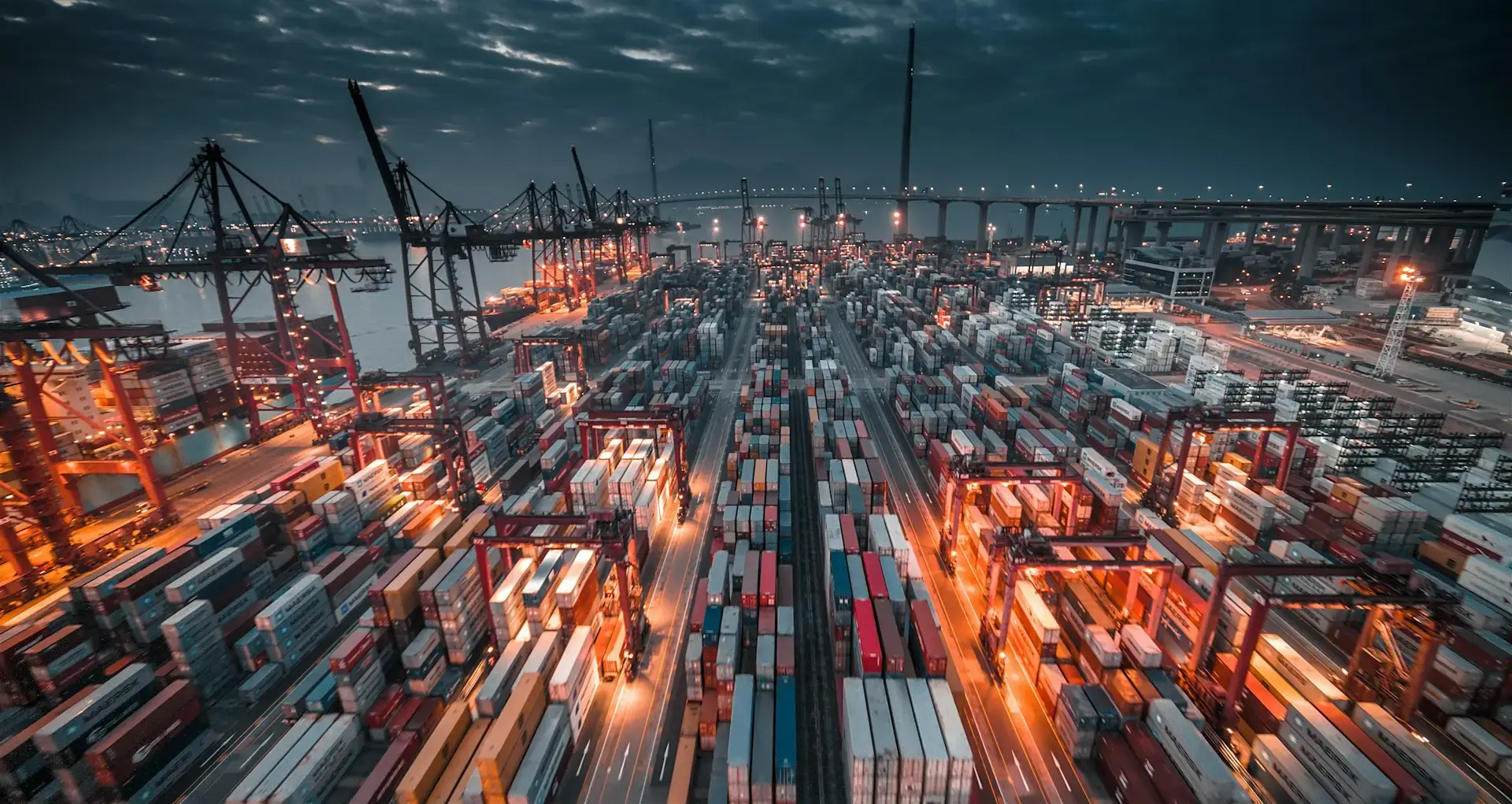
The global used clothing market is a complex economic structure connecting developed consumer markets of the Global North with developing nations in the Global South. Annually, the trade involves over 24 billion garments with a total weight close to 4.8 million tons. Wholesalers play a massive role here. They source raw, unsorted clothing (known as "original") from house collections (door-to-door), textile bins, or cash-for-clothes initiatives. Currently, the largest exporters are the USA (with an export value near 853 million USD), China, EU member states, and the UK. However, clear quality and price asymmetries exist between these primary source markets:
American clothing
This market is characterized by a relatively lower unit value compared to apparel from the United Kingdom. This disparity stems in part from anthropometric differences. The average garment size in the USA is larger, which restricts its demand and resale potential in West African destination markets.
Chinese exports
China has seen a massive surge in export volume, exploding from 133 million kg in 2015 to 1.147 billion kg in 2024. Nonetheless, Chinese exports yield an average value per kilogram that is half that of British raw materials. This lower valuation is tied to a high percentage of textile waste and defective manufacturing batches within the shipments.
On the importing side, South Asian markets (Pakistan, India) and African nations (Kenya, Ghana) dominate the trade. Countries like Pakistan and the United Arab Emirates serve as global transit and sorting hubs. Imported unsorted clothing is meticulously categorized within special economic zones before being re-exported to third countries. India, for example, categorically bans the import of used clothing into its domestic consumer market. It restricts entry exclusively to the Kandla Special Economic Zone (KASEZ), mandate-driven by the condition that at least 50% of the sorted goods must be exported outside national borders.
How to classify used clothing to achieve 50–70% margins?
The sorting process is the foundation of a wholesaler's profit margin. For the business model to remain viable, original unsorted clothing must undergo multi-stage quality and category selection. Experienced wholesalers aim for gross margins between 50% and 70%, a target typically reached by doubling the acquisition cost of the raw material.
The standard classification matrix utilized by international distributors includes four primary tiers:
- Cream class (premium): this tier consists of top-tier apparel showing minimal to zero signs of wear, frequently featuring original retail tags. The category aligns with current fashion trends and highly sought-after vintage designer wear. These goods are packed in smaller, protective bags or parcels to prevent damage.
- Grade A (Premium/Standard): these garments are in excellent visual condition with minor, barely noticeable signs of wear. They remain almost entirely free of holes, tears, heavy fading, or significant aesthetic defects (though minor blemishes are acceptable). As the inventory backbone for most traditional thrift stores worldwide, Grade A guarantees rapid turnover and is packed into hydraulically compressed bales.
- Grade B (Functional): this category covers clothing with visible, moderate signs of use, such as minor pilling, slight discoloration, missing buttons, or loose seams. Crucially, the items remain fully functional and wearable without requiring complex repairs. Due to its low unit cost, Grade B faces massive volume demand in developing markets – especially in East and Central Africa – allowing warehouses to build high sales volume at lower margins. Like Grade A, it is shipped in standardized bales.
- Grade C / Mixed Rags: this tier includes heavily worn clothing containing large stains, holes, broken zippers, or irreversible structural damage. These items are unfit for direct retail resale and are allocated strictly to recycling facilities, upcycling projects, or converted into industrial wiping rags and shredded fiber. Mixed Rags are packed into oversized, heavy-duty compressed bales.
Managing financial risk requires factoring in inevitable human error during manual sorting. The reject rate in batches declared as Grade A typically spans 3% to 7%. Notable exceptions include highly specific apparel categories, such as classic workwear (brands like Carhartt or Dickies) and military jackets. For these items, natural wear, fading, and unique patina actually elevate market value in the eyes of end consumers, rendering Grade B and C variants highly profitable.
| Quality category | Technical condition | Packaging format | Target market | Average gross margin |
| Cream (Premium) | Pristine, like-new, with tags | Bags / Parcels | Retro boutiques, e-resellers | High |
| Grade A (Standard) | Minimal wear, no holes/stains | Compressed bales | Mainstream thrift stores, retail | Moderately high |
| Grade B (Functional) | Visible wear, minor defects | Compressed bales | Global South markets, wholesale volume | Moderate |
| Mixed Rags | Defective, structurally damaged | Oversized bales | Recycling plants, industrial wiping rags | Low |
Tabela: Parametry techniczno-handlowe klas jakościowych w hurtowym obrocie międzynarodowym.
B2B platforms – how digitalization is changing the traditional wholesale model?
The traditional used clothing supply chain has historically suffered from low transparency and a reliance on analog intermediaries. This extended capital rotation cycles and generated unnecessary overhead. Today, digital B2B marketplaces are reshaping the industry by connecting retail buyers and e-resellers directly with verified wholesalers.
This shift provides warehouse operators with three distinct advantages:
- Virtual sorting inspections
Retailers no longer need to buy bales blindly or visit sorting plants in person. Through dedicated mobile apps, they can examine detailed photos and video lookbooks of specific batches, or join live video streams where facility staff showcase individual garments. - Automated valuation and sorting
B2B platforms provide wholesalers with applications powered by computer vision and machine learning, simplifying the precise identification of premium brands and streamlining counterfeit detection. - Physical quality control checkpoints
Every order passes through a physical verification hub run by the platform. The buyer receives a comprehensive inspection report prior to final dispatch, which builds cross-border trust and drastically reduces trade disputes.
New EU laws. What regulations must you know when trading used clothing?
Used clothing trading within the European Union is entering a phase of strict regulatory oversight. The EU's Circular Economy policies aim to close the textile loop completely and stop illegal waste dumping in third-world nations under the guise of exporting wearable clothing.
WFD and EPR systems (eco-modulation)
The primary pillar of this regulatory shift is the revision of the Waste Framework Directive (WFD), enacted via Directive (EU) 2025/1892. This came into force on October 16, 2025, with a national transposition deadline set for June 17, 2027. The directive mandates that all member states enforce separate collections for used textiles (a requirement active since January 1, 2025) and introduces mandatory Extended Producer Responsibility (EPR) schemes for textiles and footwear.
In practice, brands introducing apparel to the European market must pay financial contributions to Producer Responsibility Organizations (PROs). These fees are calculated using eco-modulation guidelines. Higher fees apply to low-quality, fast-fashion garments made from synthetic blends that are difficult to recycle. Conversely, durable, fiber-to-fiber recyclable apparel is rewarded with lower rates. PROs utilize these collected funds to finance regional collection, sorting, and recycling infrastructure. Any export shipments failing to meet these strict sorting criteria or showing high contamination rates will be legally treated as hazardous waste shipments.
Ban on destroying unsold clothing (ESPR)
The Ecodesign for Sustainable Products Regulation (ESPR), which took effect in July 2024, introduces a strict ban on destroying (incinerating or landfilling) unsold clothing, accessories, and footwear. This ban takes effect on July 19, 2026, for large enterprises employing over 500 people with a turnover exceeding 400 million EUR. By February 2027, these corporations must disclose the weight and quantity of discarded products using standardized EU reporting frameworks.
Instead of disposing of surplus stock, fashion brands and e-commerce platforms must establish alternative management pipelines. This requires donating excess apparel to charities or partnering directly with commercial sorting warehouses to facilitate repair, upcycling, or secondary market circulation.
Waste shipment controls and non-OECD exports
Concurrently, the EU Waste Shipment Regulation (WSR / EVOA – Regulation (EU) 2024/1157) introduces stringent export control measures starting May 21, 2026. The export of plastic waste, which directly encompasses low-grade synthetic textiles, to non-OECD countries will be completely banned from November 21, 2026.
For non-hazardous waste variants, non-OECD countries had to submit formal import authorization requests to the European Commission by February 21, 2025. From those applicants (24 nations, including Pakistan, Bangladesh, and India), the European Commission will compile an initial authorized country list to be published in November 2026. Exporting unmarketable textiles that are unfit for direct reuse to countries omitted from this list will be strictly prohibited beginning May 21, 2027.
National transport monitoring systems – the SENT case
A prime example of tightening domestic control over used textile trading in Central and Eastern Europe – a key sorting hub for German and Austrian clothing collections – is the inclusion of used apparel under state customs and fiscal surveillance. Starting March 17, 2026, transport movements of used clothing are subject to mandatory digital registration in tracking databases like the SENT system.
Monitoring applies to shipments of used clothing and other used textile articles classified under CN code 6309 00 00, provided the gross weight of the consignment exceeds 10 kg. Crucially, this registration mandate extends to new knitted garments (CN 61) and non-knitted garments (CN 62) over 10 kg gross, as well as footwear (CN 64) when transporting more than 20 items (10 pairs).
A strict aggregation rule is enforced. If a single transport vehicle carries goods across different chapters – such as 6 kg of clothes and 5 kg of shoes – the weights are summed together. Because the total exceeds the 10 kg gross threshold, it triggers a mandatory SENT registration and requires an active vehicle GPS tracking locator. The A&E Clothing has a fully integrated SENT compliance system in place, meaning our buyers and logistics partners face zero operational risks.
Failing to meet registration requirements within these tracking systems carries severe financial penalties:
- Cargo penalty: customs and fiscal authorities levy a fine equal to 46% of the gross value of the transported goods, with a minimum statutory fine of 20,000 PLN.
- Carrier penalty: transport operators risk an additional 10,000 PLN fine if the vehicle operates without a functioning GPS tracking locator during transit.
Logistics and costs – how to plan used clothing transport and bypass customs barriers?
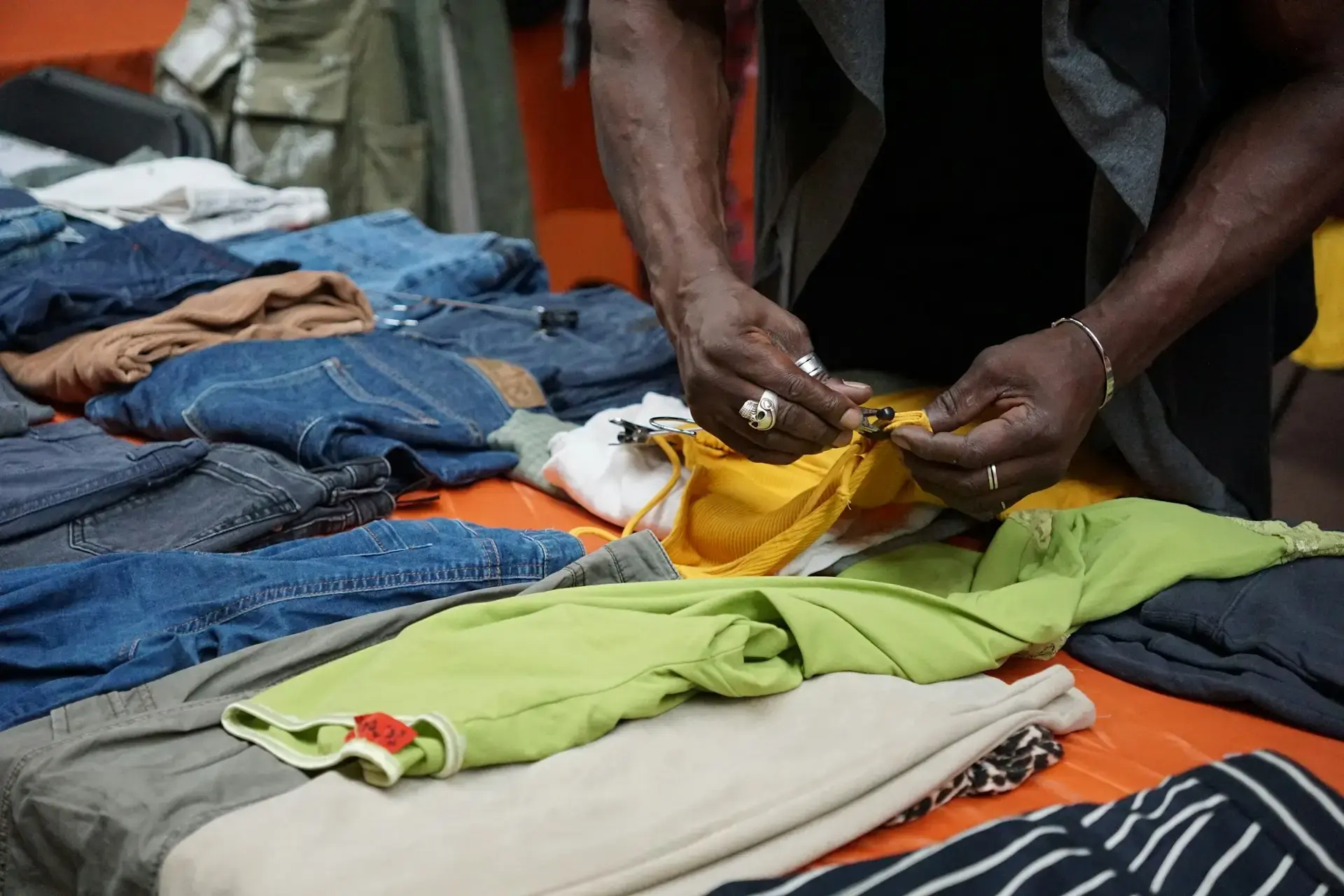
Wholesale export to international markets requires a granular calculation of landed costs and a deep familiarity with global customs tariffs. While high-value vintage apparel is occasionally moved via air freight, the vast majority of inventory travels via ocean freight. Maximizing container volume optimization for Full Container Loads (FCL) is critical:
- 20ft FCL Container holds up to 25,000 lbs (approximately 11,500 kg) of compressed textiles.
- 40ft FCL Container holds up to 53,000 lbs (approximately 27,000 kg) of compressed textiles.
Customs tariffs and target market import taxex
Efforts to protect local textile manufacturing industries across the Global South have led to rising import tariffs. The East African Community (EAC: Uganda, Burundi, Tanzania) levies a 35% customs duty on the declared customs value of imported used clothing. Rwanda has broken away from standard regional tariffs entirely, imposing a prohibitive, flat protective tariff of 2.50 USD per kilogram of imported secondhand clothing. Meanwhile, Kenya (the largest African used clothing market, locally known as mitumba) enforces a 35% tariff or a flat 0.20 USD/kg alternative, whichever is higher.
Sanitary requirements – the role of fumigation certificates
Most destination countries across the Global South categorically require proof of textile disinfection and disinfestation to safeguard against invasive pathogens and pests. The mandatory document for port clearance is a Fumigation Certificate or a disinfection declaration issued by an authorized contractor bearing an NPPO (National Plant Protection Organization) certification before container sealing.
The process involves sealing the clothing inside the ocean container and introducing a potent biocide (such as methyl bromide) or subjecting the cargo to a HT (Heat Treatment) cycle compliant with ISPM 15 standards. Arriving without a valid fumigation certificate triggers mandatory (and 20% to 30% more expensive) on-site port fumigation, cargo impoundment, or an immediate destruction order at the exporter's expense.
Frequently asked questions (FAQ)
Exporting raw, unsorted used clothing faces severe European regulatory restrictions. New provisions within the Waste Framework Directive (WFD) and the WSR/EVOA regulations mandate strict textile sorting prior to shipment. Unsorted shipments are legally categorized as raw waste, which bars them from being exported to non-OECD countries.
Every sorted bale destined for export must carry tracking documentation. This includes a precise inventory manifest detailing the sorting depth, quality metrics, specific criteria confirming reusability (such as size, gender, and fabric composition), and the full credentials of the certified entity that validated the garment's wearable technical condition.
Grade A represents garments in excellent visual condition with minimal wear, completely free of holes, major stains, or structural damage. Grade B includes functional garments showing moderate use, minor pilling, or missing buttons, while remaining fully wearable. Grade B has a lower acquisition cost and is favored in highly price-sensitive markets.
Yes. Holding an Authorized Economic Operator (AEO) status or an active cooperation agreement with the Head of the National Revenue Administration provides a structural entity exemption. It waives the requirement to report individual shipments within transport tracking registries for both import and export textile logistics in countries like Poland.
Lacking an original, NPPO-validated fumigation certificate halts customs clearance at the destination port. The cargo will either undergo forced fumigation at the port at the importer's expense (typically carrying 20% to 30% higher fees), be returned to the origin country, or be destroyed at the exporter's expense.
This restriction stems from the execution of the mandatory ban on destroying unsold apparel, accessories, and footwear under the EU's ESPR regulation. The law forces manufacturers and digital marketplaces to utilize alternative inventory strategies, including wholesale liquidation, repair, upcycling, or charitable donations.
Do you want to develop international sales and increase margins without risk? At A&E Clothing we offer exclusively precisely classified goods.
Contact us and check our assortment.