Where to sell used clothing from the USA? Market analysis for Europe and Africa
- Why does used clothing from the USA have strong export potential?
- Europe as a target market for used clothing from the United States
- Africa as a target market for exporting used clothing from the United States
- Europe or Africa? Comparing the markets
- How to match USA clothing to a specific market
- How to choose the right target market for used clothing from the USA
- Common mistakes importers make
Used clothing from the USA can be an attractive export product, but success depends on choosing the right target market and understanding its specifics. Where should you sell used clothing from the USA - Europe or Africa? We answer that question in this article.
- Europe favors higher unit-value products, especially premium, vintage, streetwear, and denim clothing.
- Exporting used clothing to Africa is profitable with large batches of fully wearable used clothing.
- Unsorted clothing doesn't have to mean low-quality goods - it's often the most attractive group of products.
- The biggest potential often lies in a multi-market model - directing the best products to Europe, and larger volumes of standard clothing to selected African markets.
Why does used clothing from the USA have strong export potential?
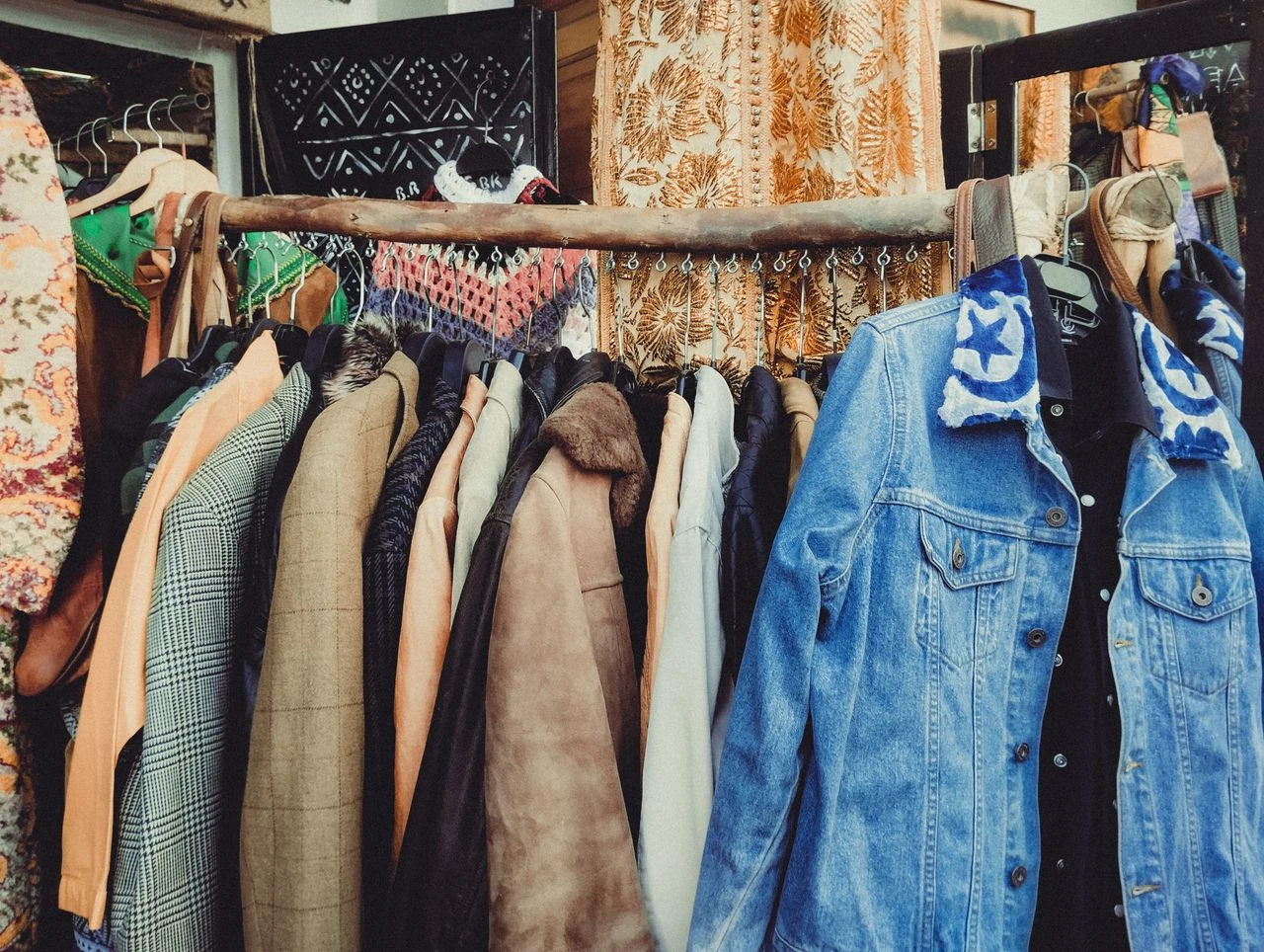
Used clothing from the United States is an attractive export product mainly due to the scale of the American market, the wide availability of branded clothing, and considerable assortment diversity. That's why the global used clothing trade relies heavily on goods originating in the USA.
Sources of supply
The secondhand market in the USA is very well developed and draws on many sources of clothing. Goods enter circulation through thrift stores, donation points, clothing buyback programs, auctions, inventory liquidation companies, and specialized textile sorting facilities.
From an importer's perspective, unsorted clothing - goods not yet divided into detailed quality and product categories - can be especially interesting. Unsorted clothing shouldn't be equated with low-quality clothing. Unsorted goods from affluent neighborhoods often contain high-quality clothing, footwear, and handbags from well-known designers, jewelry, new garments, and other valuable items with strong resale value.
Americans give away a lot of clothing largely because their lifestyle is defined by very high consumption and relatively fast wardrobe turnover, driven by changing trends. At the same time, a culture of donation is widespread, supported by an extensive network of donation points. Another factor that motivates people to give away clothing is the desire of cities to avoid the high environmental fees tied to managing textile waste, known as tipping fees - which encourages Americans to pass unwanted items into the secondary market instead of throwing them away.
The range of used clothing available
The scale of the market means access to a huge and varied volume of products. Categories with significant export potential include:
- branded everyday clothing, since it's in demand across many markets and among customers of every age group,
- luxury brand clothing, due to its high unit value, especially as customers increasingly buy luxury items on the resale market,
- vintage clothing, attractive for its uniqueness and its ability to command high unit prices,
- streetwear, clothing that's especially appealing to younger consumers,
- denim clothing, since denim is one of the most universal categories of used clothing,
- sportswear, especially from well-known brands like Nike, Adidas, or Reebok, thanks to strong brand recognition and wide demand,
- children's clothing, since customers are keen to buy used clothing for children given how often it needs replacing,
- workwear, which has sales potential both as functional clothing and as a streetwear style element.
Europe as a target market for used clothing from the United States
The European used clothing market is developing rapidly, and secondhand is no longer seen purely as a budget clothing segment. That's why the export of used clothing from the USA to Europe is gaining importance.
Characteristics of the European used clothing market
One factor driving the used clothing market is growing environmental awareness among consumers. For a growing group of shoppers, buying secondhand clothing isn't just a way to cut spending - it's also a way to reuse existing items and reduce textile waste, which fits into an increasingly popular sustainability agenda.
At the same time, secondhand is moving further online. The growth of marketplace platforms, apps specializing in used clothing sales, and online stores has made it possible to reach a much larger customer base. Online trade also makes it easier to sell individual, high-value pieces - which matters especially for imported vintage clothing, streetwear, denim, and branded products from the USA.
From the perspective of a USA clothing importer, this means significant flexibility. Goods can be sold directly to consumers in Europe, to resellers or retail stores, as well as to used clothing wholesalers.
Opportunities and limitations of the European market
Europe is an attractive destination for USA used clothing importers, especially those with a well-selected assortment, including branded clothing or items with vintage potential. At the same time, it's a demanding market - high competition and rising consumer expectations mean that access to cheap USA clothing alone doesn't guarantee profitability.
Advantages of the European market include:
- high purchasing power - in most European markets, consumers have relatively high purchasing power, which allows selling not just cheap used clothing but also products from higher price segments,
- the ability to command high prices for branded pieces - most global brands, including well-known designer names, are highly recognizable across most European markets and sought after by customers, meaning even a small share of valuable products within a large unsorted batch can meaningfully affect the profitability of an entire import,
- well-developed logistics infrastructure - Europe has a well-developed network of ports, logistics centers, warehouses, courier companies, and fulfillment operators, which significantly eases the import of large batches from the USA as well as later distribution between individual countries.
Among the challenges USA used clothing importers must account for:
- strong competition - the European market has a well-developed secondhand sector, and access to so-called fast fashion, meaning cheap clothing available at popular chain stores, is also growing,
- high product quality requirements - European consumers increasingly expect high-quality clothing, both in terms of craftsmanship and condition,
- increasingly strict textile and waste regulations - EU rules are increasingly supporting a circular economy, separate textile collection, and product reuse, which may create competition for used clothing from the United States.
Africa as a target market for exporting used clothing from the United States
Africa is one of the most important regions in the global used clothing trade. According to UNESCO data on the fashion industry in Africa, the continent accounts for nearly a third of the world's used clothing imports. What's more, as much as 80% of Africa's population wears used clothing, mainly sourced from the United States, followed by Europe and India.
Why is Africa an important destination?
In many African countries, used clothing is significantly cheaper than new clothing that's either imported or produced locally, giving it a strong chance of reaching a broad group of consumers. And there's no shortage of consumers in Africa - the continent has more than 1.4 billion inhabitants. It's worth noting, though, that Africa isn't a single, uniform market. Individual countries differ in demand size, purchasing power, trade structure, logistics costs, and regulations governing used clothing imports.
From an importer's perspective, the countries of West and East Africa are especially interesting, as they have well-developed used clothing trade. Among the most notable markets are Ghana, Nigeria, Togo, Senegal, Kenya, Tanzania, South Africa, and Uganda. Ghana deserves priority attention thanks to its developed used clothing trade ecosystem, Kenya due to its very large import scale, and Nigeria due to the enormous potential of its used clothing market.
What does used clothing sales look like in Africa?
The used clothing sales model in Africa differs from what's becoming characteristic of European countries. While in Europe, particularly Western Europe, the sale of individual, hand-picked pieces is growing in importance - partly through online platforms - in Africa, wholesale trade and retail sales through extensive networks of local sellers still play the leading role. At the same time, the African market is especially interesting for businesses handling larger batches of goods. With bigger orders, the logistics costs an importer carries can be spread across a larger volume of goods, which improves the profitability of the whole operation.
Opportunities and risks of the African market
The African market can be an attractive destination for a USA used clothing importer, mainly due to the scale of demand, the ability to sell large batches, and well-developed wholesale channels. However, entering this market requires greater attention to logistics, payments, and regulations than selling in many European markets.
Advantages of the African market include:
- strong demand for affordably priced clothing - used clothing is a significant segment of the clothing market, which for importers means the ability to move large volumes of fully wearable clothing at a moderate unit value,
- the ability to sell large batches of used clothing - importers gain the ability to move goods faster and reduce the number of operations tied to handling individual orders, as local partners take over the goods, sort them, and distribute them through their own sales network.
Unfortunately, importing goods to Africa also comes with certain risks, including:
- regulatory differences between countries - there's no single set of rules across all of Africa, and each country has its own regulations on imports, customs duties, taxes, and documentation; participants in international transactions must also account for greater currency fluctuations than in Europe,
- limited control over the further distribution channel - local partners take over most of the work related to sorting, distribution, and sales, but for the importer this means comparatively less feedback data to help plan future deliveries.
Europe or Africa? Comparing the markets
There's no single answer to whether used clothing from the USA is better sold in Europe or in Africa. Europe is especially attractive for well-selected, branded, high-value goods that can be sold individually. Africa, meanwhile, can be a very good destination for large batches of fully wearable clothing, where volume and efficient distribution are what matter most.
| Criterion | Europe | Africa |
|---|---|---|
| Demand | Very high demand for used clothing in Europe, especially in countries with a developed recommerce market | Very high demand for used clothing in Africa in selected countries |
| Average sale price | Usually higher per unit | Usually lower per unit |
| Required quality | Higher | Moderate, market-dependent |
| Order size | Moderate | Large batches of goods |
| Potential margin | Higher on individual pieces | Lower, based primarily on volume |
| Competition | Very strong | Moderate |
| Barrier to entry | High quality and regulatory requirements | Requires knowledge of local regulations |
| Business risk | Relatively low when selling in the EU market | Higher logistics, currency, payment, and regulatory risk |
| Scalability | Very high, partly thanks to e-commerce | Very high when working with local importers and wholesalers |
How to match USA clothing to a specific market
One of the biggest advantages for an importer buying used clothing from the USA is the ability to split a single batch into several segments and direct them to different markets. Products with high unit value can generate a bigger margin in retail sales, while large volumes of standard, fully wearable clothing are better suited to the wholesale channel.
This approach is especially valuable when buying unsorted clothing. After sorting, the importer can divide the goods not just by clothing type or quality, but also by target market.
First among secondhand clothing categories is the premium segment, the cream class, meaning branded garments, limited-collection pieces, currently fashionable items, or vintage styles. These are clothes free of wear marks, stains, or discoloration, with intact fabric structure, undamaged seams, and fully functional zippers, buttons, and snaps. The best destination for this type of goods is Europe, since it offers the greatest opportunity to sell individual products at a price that reflects their real market value.
The second group is a broad segment of sorted clothing known as Grade A, covering clothing in good condition that's ready for resale without needing further sorting. This category mainly includes everyday women's, men's, and children's clothing, denim, sportswear, and workwear, which may have some minor defects and signs of wear but still retains high commercial value. For goods in this category, volume is the key factor - not maximizing the price of each individual piece, the way it works for cream-category used clothing. That's why Grade A clothing works best as goods for African markets, where it's sold wholesale to local wholesalers and retailers.
How to choose the right target market for used clothing from the USA
The choice of target market shouldn't rest solely on the size of demand. For a USA used clothing importer, the achievable price, logistics costs, regulations, transaction risk, and how well a specific batch fits local consumers' needs all matter just as much.
Before making a decision, an importer should analyze demand for a given type of clothing, the achievable average sale price, and the potential margin after accounting for all costs. Transport and customs clearance costs, legal barriers, and the level of competition in a given market are equally important. It's also worth assessing payment risk and the reliability of potential trading partners, the ability to scale up sales, and the availability of local importers, wholesalers, and distributors. Matching the specific assortment to local demand is also key.
Criteria to consider:
- demand - how large is overall demand for used clothing, and how large is it for specific categories?
- average sale price - what price can be achieved per kilogram, per selected batch, or per bale of used clothing?
- margin - how much remains after subtracting purchase and transport costs?
- fees and formalities - what customs duties, taxes, import restrictions, documentation, and legal regulations apply?
- competition - how strong is competition among importers in a given market?
- financial risk - how secure are the settlements, and how reliable are the counterparties?
- scaling potential - is it possible to increase volume without losing profitability?
- local partners - is there a shortage of local wholesalers and distributors?
- assortment fit - will the imported goods from the USA meet local buyers' expectations?
Common mistakes importers make
Among the most common mistakes made by used clothing importers is choosing a market based solely on population size, without analyzing real demand and local preferences regarding styles, sizes, and clothing categories. Underestimating transport costs, failing to account for regulatory changes affecting textiles in specific regions, and insufficient vetting of business partners are also problematic. Another mistake is too low a level of quality control over the goods, sending the same assortment to different markets, and - in the case of shipments to Africa - treating the whole continent as a single, uniform market.
FAQ - frequently asked questions
It all depends on the business model. Unsorted clothing usually comes at a lower price and carries strong potential for a higher margin, but it requires in-house sorting and quality control, as well as finding buyers for batches of varying quality. Sorted clothing is generally more expensive, but more predictable and therefore easier to resell.
Definitely not. It all depends on the source and how the goods were collected. Unsorted batches can contain many high-quality items, especially if they come from residents of affluent areas. That's why it's worth looking closely at where specific batches of used clothing originate.
It's one way to source higher-quality batches, but it shouldn't be treated as a quality guarantee. When importing used clothing, it's also worth looking at actual data on the quality and composition of previous deliveries, rather than relying solely on declared origin.
Yes - in fact, that's a beneficial model, especially when bringing in large batches of unsorted clothing. In this case, the importer can split the goods across different used clothing markets to maximize sales profits.
Brand recognition and its sales value can differ significantly between markets. That's why an importer should analyze local demand for specific brands. Generally speaking, though, most brands popular in the United States are well known in European markets.